

The library isn’t automatically the better place to prepare for the bar. The best choice for studying for the bar exam at home vs library depends on what helps you focus, what interrupts your routine, and what kind of task you plan to complete. A quiet home may save travel time, but only if you can protect that quiet. A library can add structure, but the commute may make a long study day harder to sustain.
It’s reasonable to want a reliable setup for an exam that demands steady preparation. But your location matters less than whether it helps you follow a realistic plan and make progress. This comparison will help you weigh focus, convenience, and common distractions so you can choose the setting, or combination of settings, that fits your needs.
We’ll look at when home study, library sessions, or a hybrid routine may work best, including how different tasks can call for different environments. The goal isn’t to find a perfect study spot. It’s to build a consistent routine that supports effective bar exam preparation.
Key Takeaways
- Compare home and library study conditions across focus, interruptions, convenience, and routine before choosing your default setting.
- Use a quick self-assessment to identify whether your biggest obstacle is distractions, isolation, commuting, comfort, or consistency.
- Match study tasks to the environment that makes them easier to complete, and consider a hybrid routine when one setting doesn’t fit every task.
- When weighing studying for the bar exam at home vs library, prioritize a setup you can repeat as part of a realistic preparation plan.
- Structured California bar preparation through the JW Bar Method can bring direction to a home, library, or hybrid routine.
Bar Exam Study: Home vs. Library - What Matters?
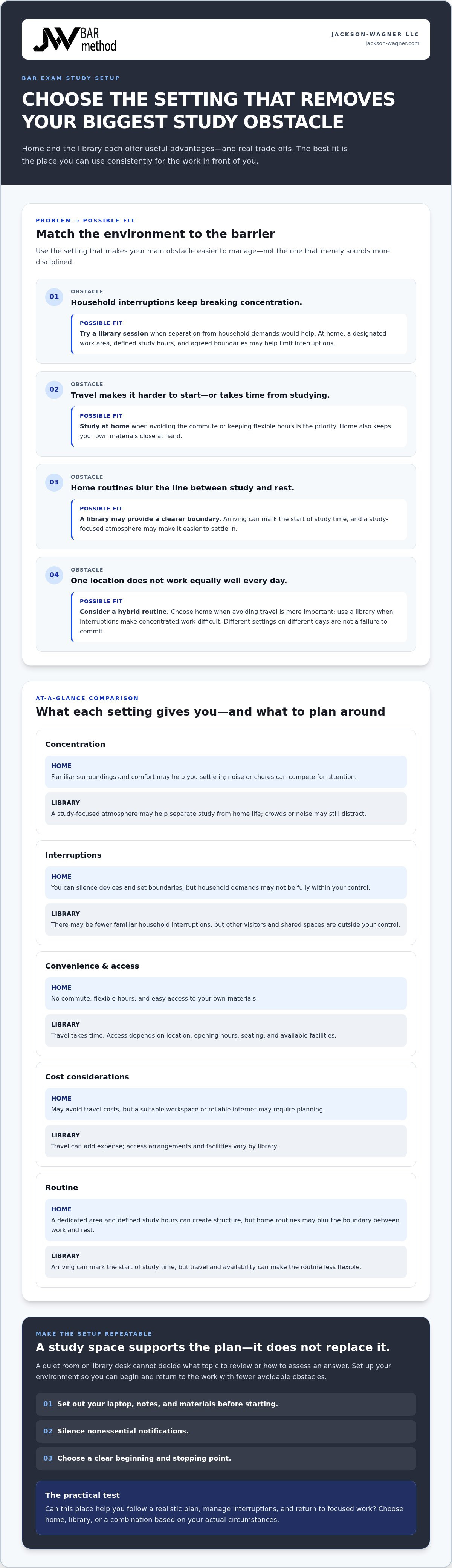
Choose the setting that reduces your biggest study obstacle, not the one that sounds most disciplined. If household interruptions repeatedly break your concentration, a library may help. If travel drains time or makes it harder to start, home may be more practical. The decision about studying for the bar exam at home vs library is personal: the best environment is the one you can use consistently for the work in front of you.
A productive space supports concentration, repeatability, access to materials, and the task you plan to do. It can make it easier to begin and stay engaged, but it can’t replace a clear study plan or determine exam performance on its own. For general context on the purpose and structure of bar examinations, see The Bar Examination. Your location is one practical part of preparation, not a measure of how seriously or effectively you’re studying.
What makes a bar exam study space effective?
An effective study environment is a repeatable place and routine that make focused work accessible and interruptions manageable. Set out your laptop, notes, and materials before starting, silence nonessential notifications, and choose a clear beginning and stopping point. You should be able to return to the task without spending each session searching for supplies or deciding when to begin.
Think of the environment as support for your plan, not the plan itself. A quiet room won’t tell you which topic to review or how to assess an answer, and a library desk won’t automatically make a session productive. Those outcomes depend on the preparation strategy you follow. Your space should help you carry it out with fewer avoidable obstacles.
Why the home-versus-library choice is personal
Daily circumstances shape what’s realistic. Your housing may determine whether you have a dedicated desk or share space with others. Household responsibilities can create predictable interruptions, while a commute may add friction to getting started or returning for another session. Work, caregiving, and other commitments also affect when and where focused study can fit.
Your focus preferences matter, too. Some candidates concentrate better in quiet solitude; others find that being around people who are also working helps them settle into a routine. Access to a suitable library, its opening hours, and the practicalities of bringing materials can all affect whether it’s dependable. These factors may shift from day to day, so needing different settings at different times isn’t a failure to commit.
Home can offer convenience and control, while a library can provide separation from household demands. A hybrid routine can draw on both. You might choose home when avoiding travel is the priority, then use a library when interruptions make concentrated work difficult. There’s no universal winner. Compare the trade-offs and consider which setting, or combination, addresses your actual barrier while fitting your preparation routine.
Home vs. Library for Bar Prep: Compare Focus, Flexibility, and Distractions
Each setting solves different problems and comes with trade-offs. Compare what you can control, such as notifications and study boundaries, with practical limits like household noise, travel, and library hours. Neither location guarantees stronger preparation. The better fit is the one that makes your study routine workable.
| Factor | Home | Library |
|---|---|---|
| Concentration | Familiar surroundings and comfort may help you settle in, but noise or chores can compete for attention. | A study-focused atmosphere can help separate study from home life, though crowds or noise may still distract. |
| Interruptions | You can silence devices and set boundaries, but household demands may not be fully within your control. | There may be fewer familiar household interruptions, but other visitors and shared spaces are outside your control. |
| Convenience | No commute, flexible hours, and easy access to your own materials. | Travel takes time, and access depends on location, opening hours, seating, and available facilities. |
| Cost considerations | May avoid travel costs, but a suitable workspace or reliable internet may require planning. | Travel can add expense; access arrangements and facilities vary by library. |
| Routine | A dedicated area and defined study hours can create structure, but home routines may blur the boundary between work and rest. | Arriving can mark the start of study time, but travel and availability can make the routine less flexible. |
When studying at home may work better
Home can be practical if travel would take time you need for study, or if you benefit from flexible hours and familiar materials close at hand. Comfort may also help you stay settled during longer work sessions. Household noise, caregiving, chores, and phone or computer distractions can interrupt focus. These are real constraints, not personal failings. Try using a designated work area, setting defined study hours, and agreeing with household members on how to limit interruptions.
When the library may offer a stronger study setting
A library can create a boundary between studying and household routines, reducing the pull of familiar chores. The shared, study-focused atmosphere may also help you get started. Factor in the commute, opening hours, crowding, and the possibility that your preferred seat won’t be available. A library only helps if getting there and working there are realistic for your routine.
Home may fit better when convenience and control matter most; the library may fit better when separation from home helps you focus. When comparing studying for the bar exam at home vs library, consider which obstacles are adjustable and which are built into your day. You might silence notifications in either setting, but you can’t always control a household interruption or a crowded reading room.
If you’re building a consistent environment around California bar preparation, structured support such as the JW Bar Method can provide direction for a home, library, or hybrid routine. Your location is one decision; your preparation plan still needs to guide what you do there.
How to Choose a Bar Exam Study Location That Fits Your Real Life
Don’t choose based on an idealized picture of bar prep. Choose based on what actually happens during your study day. A simple self-assessment can show whether home, the library, or a mix of both is more likely to reduce the obstacle that disrupts your work.
Identify the obstacle your study space needs to solve
Start by noticing when concentration breaks down. Is it before you begin, after an interruption, or once you’ve been working for a while? The distinction matters: a new location may help with noise or isolation, but it won’t by itself solve unclear priorities, difficulty with the material, or fatigue. Be specific about the problem before changing your setting.
- Map your real study windows. Write down when you can reliably study around work, caregiving, household responsibilities, and other commitments. Consider whether those hours match library access hours or are easier to use at home.
- Name the interruption or friction. Identify what most often breaks a session: household noise, messages, chores, feeling isolated, or time spent traveling. Separate what you can change, such as muting notifications, from what you may need to work around.
- Check access and comfort. Ask whether you have a usable workspace, reliable access to the materials you need, and a setting where you can stay for the work you’ve planned. Include practical details such as transportation, seating, and bringing books or a laptop.
- Separate location problems from study problems. If you lose focus because you’re unsure what to do next, review your plan rather than assuming the room is the cause. If you understand the task but can’t get uninterrupted time, the environment may be the main barrier.
- Pick one observable measure. Track something you can verify, such as whether you completed the focused study block you planned. You could also note interruptions or setup time, but use the same measure across locations.
Run a short home-and-library study trial
Use a few comparable study sessions to test your assumptions about studying for the bar exam at home vs library. Choose similar blocks of time and tasks with roughly similar demands, such as reviewing material or working through practice questions. Comparing a rested morning at home with a tired evening at the library makes it harder to tell what role the location played.
After each session, jot down the same observations:
- Whether you completed the work you planned
- How often interruptions pulled you away, and whether they were within your control
- How long it took to get started, including travel or setup
- Whether the space supported concentration and felt comfortable enough to return to
Look for a pattern, not a perfect session. If home works but household interruptions derail you at a particular time, adjust your study hours or set clearer boundaries. If the library feels focused but the commute makes attendance unreliable, reserve it for sessions when the benefit is worth the travel. Your focus and follow-through matter more than a “perfect” setup. Let the trial guide a practical adjustment, then reassess if your schedule or circumstances change.
Build a Home, Library, or Hybrid Routine Around Bar Exam Tasks
A location routine works best when it supports the task you’ve chosen, rather than forcing every kind of study into the same setting. Home may be convenient for accessing books, notes, and other materials. A library may help you focus if leaving home creates useful separation. Neither setting has to be reserved for a particular task. Decide where reading, reviewing, timed practice, or analyzing answers feels most manageable for you.
Match study tasks to the setting
Use your experience to guide the match. If you can concentrate at home, there’s no need to travel just to complete a practice set. If household activity makes sustained focus difficult, a library might be a better fit for that session. You may prefer reviewing notes at home, then working through timed questions elsewhere, or find that the reverse works better. Treat location as a practical choice, not a rule about how bar preparation must be done.
For a broader view of exam preparation, use the California Bar Exam strategic guide alongside your own study plan. Your environment helps you carry out the work; it doesn’t decide what your preparation should cover.
Make a hybrid routine consistent and sustainable
A hybrid routine doesn’t need a complicated calendar. Give each location a predictable role that fits your real constraints. For example, use home on days when travel would squeeze your available study window, and choose the library when distance from household activity would help you focus. Account for responsibilities, commute time, opening hours, and whether you can reliably get a place to work.
Here’s a flexible sample week. Shift the pattern to match your commitments, and change the location if a setting isn’t helping you follow through:
- One home session: Review notes or organize materials where they’re easy to access.
- One library session: Try focused practice or reading if the study setting helps you concentrate.
- Another home session: Review answers or continue a task without adding travel to the day.
- Another library session: Use the separate environment for work that’s harder to begin at home.
- A flexible session: Choose either location based on your schedule, energy, and access that day.
Prepare your materials before switching locations. A ready-to-go set of notes, books, and digital files can reduce setup friction and help you begin promptly. Choose a fallback, too: if your preferred library is closed or crowded, know which home workspace you’ll use. If home becomes too disruptive, identify another realistic study option. A backup keeps your routine from depending on ideal conditions.
The point of studying for the bar exam at home vs library isn’t to pick one location forever. It’s to create a repeatable pattern that adapts without losing direction. Jackson-Wagner’s structured and accelerated California bar preparation through the JW Bar Method can support a consistent approach across home, library, or hybrid study. Explore California bar exam preparation to find a structured path for your preparation.
Make Your Study Location Support a Structured Bar Prep Plan
Your study space can make it easier to follow through, but it can’t provide the preparation structure for you. Home, the library, or a hybrid routine can all support bar study when each session has a clear purpose and fits your real schedule. The goal of comparing studying for the bar exam at home vs library isn’t to find a perfect room. It’s to choose a practical setting and use it consistently as you work through your plan.
Use structure to make either setting productive
Before each session, know what you intend to work on, what materials you need, and how you’ll review what you’ve done. Then choose the place that makes those steps most manageable. If you move from home to the library, take your plan with you. The setting can change without requiring you to rethink your preparation. A predictable process helps keep location from becoming another decision to make every study day.
When comparing preparation approaches, consider whether the method gives your study sessions direction rather than simply adding more material. The bar exam preparation service guide offers a broader framework for thinking about that choice. Whatever approach you follow, use your workspace to carry out the plan, not as a substitute for one.
Explore California-focused preparation options
For candidates preparing for the California Bar Exam or California Attorney’s Exam, Jackson-Wagner’s proprietary JW Bar Method provides a structured preparation approach. Programs cover the Full Exam California Bar and the California Attorney’s Exam, with standard and accelerated preparation tracks. This structure can bring direction to a routine whether you study at home, at the library, or in both places.
Keep the location decision grounded in what helps you return to your planned work. You might choose a quiet library for a session that needs separation from home, then study at home when travel would make the day harder to manage. The same preparation plan can travel between settings, while your location responds to your schedule and circumstances.
If you’re preparing for a California exam, learn more about California bar preparation and how the JW Bar Method’s structured or accelerated tracks can fit into your preparation. Start with a clear plan, then let your study setting support it.
Set Up Your Next Study Session with Purpose
Your study environment doesn’t have to be perfect before you begin. Choose the place that makes your next planned task easiest to start, then notice what helps you stay with it. As your schedule, responsibilities, or energy shift, give yourself room to adjust. A location choice is a tool, not a permanent commitment or a verdict on your discipline.
Use your next session as a practical starting point: decide what you’ll work on, gather what you need, and choose the setting that fits. If you’re still weighing studying for the bar exam at home vs library, focus on the option that makes it more realistic to return to preparation consistently. Small, repeatable decisions can give your study plan a stronger foundation.
For a structured path tailored to California bar preparation, explore California bar preparation with Jackson-Wagner. The JW Bar Method offers preparation for the Full Exam California Bar and California Attorney’s Exam, with standard and accelerated tracks. Choose a plan that fits your needs, and move forward with confidence in the routine you’re building.
Frequently Asked Questions
Is it better to study for the bar exam at home or in a library?
Neither option is best for everyone. When comparing studying for the bar exam at home vs library, consider what happens during an actual session, not how productive each place seems in theory. Try the same kind of task in both settings, then note whether you could start on time, stay engaged, and finish the planned work. Your experience can reveal more than choosing based on reputation or other candidates’ preferences.
Can I study for the bar exam effectively at home?
Yes, home can work if you make it easier to begin and harder to drift into unrelated tasks. Choose a chair and desk you use primarily for studying, keep the materials for your next session together, and close tabs or apps unrelated to the assignment. If others share your space, a visible “studying” cue can signal that you’re unavailable until your planned break.
Should I study at the library every day for bar exam preparation?
No, a daily library visit isn’t necessary if another routine helps you complete your study work. Consider how the commute affects the time and energy you have for the session, and whether the library’s hours line up with your available study windows. If you’re unsure, try library visits on selected days and compare them with home sessions before making the trip a daily commitment.
How do I stop getting distracted while studying for the bar exam at home?
First, identify what pulled your attention away. For a few sessions, make a quick note each time you pause and record the cause, such as a message, a household request, or switching to another task. Then address the pattern: leave your phone in another room, agree on a quiet period with household members, or write down unrelated chores to handle after studying rather than doing them immediately.
What should I bring to the library to study for the bar exam?
Pack for the specific assignment rather than carrying your entire study setup. For a practice session, that might mean the relevant questions, answer materials, a notebook, writing tools, and a laptop if you’ll use digital resources. Bring a charger if needed, plus water or other permitted essentials. A short checklist can prevent forgotten items; review the library’s rules for food, devices, and reservations before your visit.
Is a hybrid home-and-library study routine practical for bar prep?
Yes, a hybrid routine can be practical if switching locations doesn’t consume more effort than it saves. Keep core materials in one organized bag or digital folder, and make a brief note at the end of each session about where to resume. For example, if a library visit falls through, use a prepared home task that doesn’t depend on access to library equipment or a particular seat.


