

What if your best bar study space isn’t a quiet, perfectly equipped room, but a setup you can return to consistently? Creating the optimal bar study environment doesn’t require a dedicated office or specialized gear. It starts with practical choices that help you focus, whether you’re studying at home, between work commitments, or in a shared space.
Noise, clutter, and phone notifications can interrupt a session, especially when bar preparation already competes with the rest of your life. You don’t need to control every part of your surroundings to make studying more manageable. This guide shows you how to build a reliable setup, reduce common distractions, and adapt when your space or schedule changes.
You’ll find practical ways to manage sound, lighting, study materials, and digital interruptions, along with strategies for making your setup sustainable throughout preparation. Pairing that environment with a clear study plan gives each session a defined purpose. The JW Bar Method offers structured preparation for the California Bar Exam and California Attorney’s Exam, with standard and accelerated tracks.
Key Takeaways
- Creating the optimal bar study environment means building a repeatable setup, not finding a perfect or expensive room.
- Choose a study spot you can access consistently, then make small adjustments to support comfort and reduce interruptions.
- Compare home, library, and shared spaces to find the option that best fits your study day.
- Use a simple start-and-reset checklist to prepare materials, limit digital distractions, and make your next session easier to begin.
- Connect each session to a specific task so your workspace supports a structured California bar preparation plan.
What Makes an Optimal Bar Study Environment? Start With What You Can Control
Creating the optimal bar study environment isn’t about finding a silent room or furnishing a dedicated office. It’s about shaping the conditions around a study session so you can begin, stay engaged, and return to your setup consistently. Your environment includes the physical space, your digital setup, and the routine cues that signal it’s time to focus, such as opening your materials and putting your phone out of reach.
A supportive study environment combines physical, digital, and routine-based conditions that make focused work easier. A study location is simply where you sit. A kitchen table can work well when prepared for a session, while an attractive office may not help if notifications and interruptions keep pulling your attention away. A broader view of learning environments includes physical settings, cultural contexts, and educational approaches, but this guide focuses on conditions you can adjust for your bar preparation.
Which environmental factors affect focused study?
Pay attention to five adjustable factors: noise, visual clutter, comfort, lighting, and interruptions. Their effects vary from person to person. Background conversation may distract one candidate but not another; a bright room may feel energizing to some and uncomfortable to others. A crowded surface can make materials harder to find, and a chair or screen position that feels fine at first may become uncomfortable during a longer session.
Track what actually disrupts your work instead of trying to optimize everything at once. After a session, note whether you lost focus because of household noise, searched for an outline, checked a message, or needed to change position. If the same issue keeps coming up, test one adjustment next time: move to a quieter corner, clear unused materials, silence nonessential alerts, or reposition your screen. Keep changes that help you settle into the task and skip the rest.
Why does consistency matter more than a perfect room?
A familiar setup can become a useful cue to begin. Use the same simple sequence each time, such as placing notes within reach, opening the assigned materials, and silencing your phone. This reduces the decisions between sitting down and starting. The cue doesn’t need to be elaborate; it needs to be easy to repeat.
No dedicated office? Build a portable version. Keep essential study materials together in a bag or folder, then use the same brief setup routine at a kitchen table, library desk, or shared workspace. If someone else needs the surface afterward, a clear-down routine makes it easier to reclaim next time. Consistency comes from repeating useful actions, not controlling every feature of the room.
Keep this takeaway in mind: a functional bar study setup can be simple, adaptable, and consistent. Start with the conditions that affect your attention most, then refine only what helps you return to focused work.
Build a Bar Study Space That Supports Focus and Comfort
Choose a primary study spot you can access reliably, where interruptions are manageable, even if they can’t be eliminated. A corner of a shared room may work if it’s available at predictable times; a desk that’s often occupied may be less dependable. Before settling on a spot, consider whether you can keep materials nearby, use your device comfortably, and reduce the disruptions that tend to break your concentration.
Keep the setup practical. A supportive chair and a work surface at a comfortable height matter more than matching furniture. Adjust what you already have before considering new equipment, and leave enough room for the materials you’ll use in that session.
How can you set up a desk for longer study sessions?
Place frequently used materials, such as notes, a notebook, and a drink, within easy reach. Move unrelated items off the work surface so you don’t have to sort through clutter before starting. If possible, arrange your screen and printed materials near one another. Repeatedly turning or shifting attention between distant surfaces can make a session less comfortable.
For screen position, OSHA’s computer workstation guidance recommends placing a monitor directly in front of you, with its top at or below eye level, to support a neutral viewing posture. Adjust the screen to a comfortable distance, and use a stable stack of books if you need to raise it. Change positions or take brief movement breaks when you notice stiffness or restlessness; there’s no need to follow a rigid interval.
How can you manage sound, lighting, and visual distractions?
Test the sound level that lets you work comfortably. Some candidates prefer quiet; others find steady background sound less distracting than intermittent noise. If you can’t control the noise, earplugs or headphones may help, provided they’re comfortable and suitable for the task. Treat them as options, not requirements, and notice which approach works best for you.
- For lighting: Use even, comfortable light so you can read notes without squinting. Shift your screen or papers to reduce glare from windows and lamps.
- For visual focus: Keep only the materials needed for the current task in view. A tidy surface makes it easier to find what you need without buying organizers.
- For household interruptions: Agree on a simple visual cue, such as a note on the door or a designated study light, to show when you’re working. Choose a signal everyone in the household understands.
Small adjustments are enough to get started. Pair your workspace with a clear California-specific study plan so each session has a defined purpose. Jackson-Wagner’s structured California bar preparation supports preparation for the California Bar Exam and California Attorney’s Exam.
Home, Library, or Shared Space: Choose the Setup That Fits Your Study Day
There’s no universally best place to prepare for the bar. Choose a setting you can access consistently and use for the task at hand. Compare each option by practical details: how easy it is to get there, how predictable the conditions are, whether noise is manageable, how comfortable you feel, and whether you can work with enough privacy. Creating the optimal bar study environment may mean using different settings for different kinds of work.
| Setting | Potential advantages | Considerations |
|---|---|---|
| Home | Convenient access and familiar materials | Household activity, limited space, and digital distractions |
| Library | A separate setting with an established study atmosphere | Travel, opening hours, seating, and noise expectations |
| Shared space | A change of scene or a place to work near others | Availability, privacy, conversation, and comfort can vary |
When is studying at home a practical choice?
Home can be practical when travel would make a session harder to fit into the day or when your outlines and other materials are already there. It also lets you adapt the space to your preferences. The trade-offs include family activity, a desk that doubles as a dining table, and notifications on personal devices.
Set a defined study zone, even if it’s only one end of a table. Keep the materials for the current task together, and agree on a cue that tells others when you’re studying. When the session ends, clear the surface and store your materials in one place. That reset lets the area return to its other uses without making the next start feel like a new setup.
When might a library or shared study space work better?
A separate location may help if interruptions at home are frequent or you need a clearer boundary between study and household responsibilities. Before relying on it, consider whether you can get there at your planned study times, whether seating is usually available, and what noise level its rules and everyday activity allow. Shared spaces may offer company, but conversation and privacy can vary.
Test locations against your own experience. Notice where you can complete a demanding task with fewer disruptions and return reliably, rather than choosing a setting because it seems more serious or prestigious. You might use a quieter location for timed writing or difficult material, then study at home to review notes or organize the next task. A flexible approach lets the setting serve the work without assuming any location guarantees better focus or exam results.
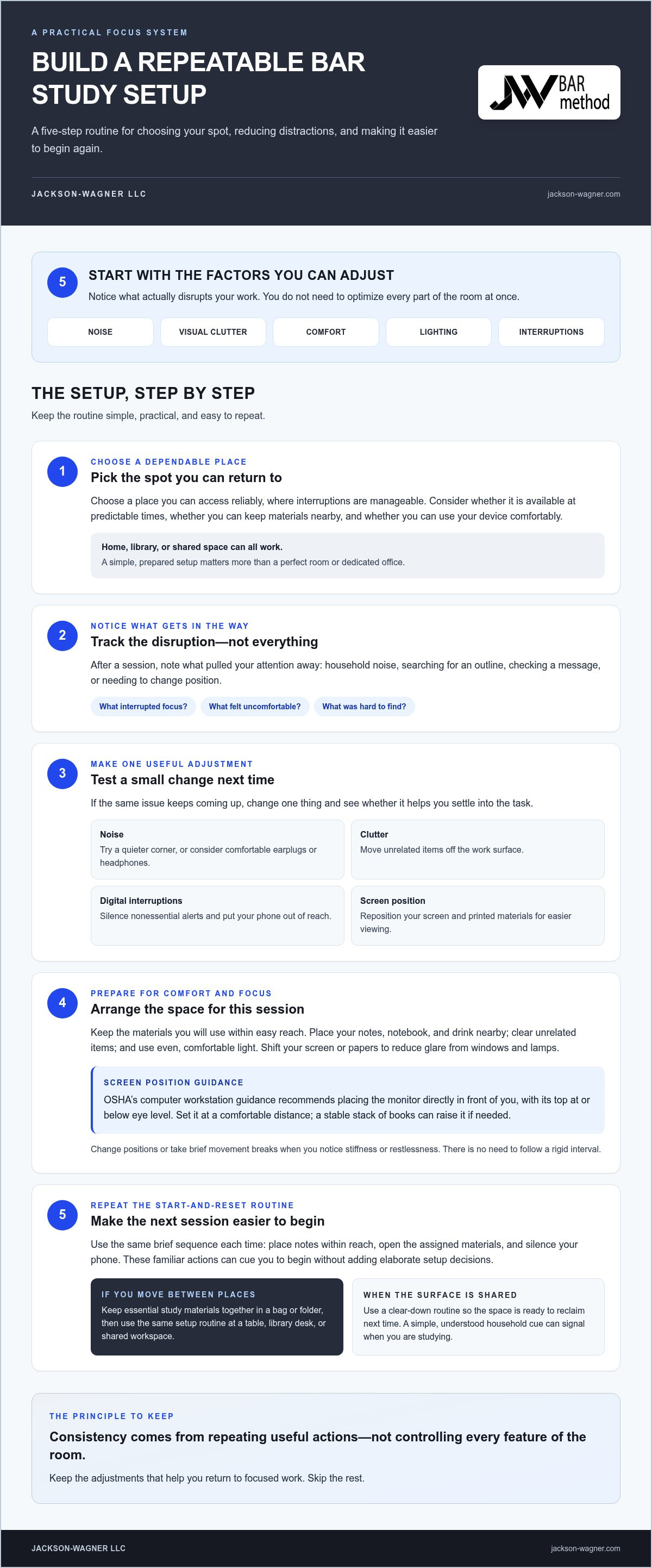
Create a Repeatable Bar Study Setup: A Step-by-Step Checklist
A reliable setup should be quick to repeat, even when your study location changes. Use this checklist to move from arriving at your workspace to starting the task, then leave a clear starting point for next time.
- Choose your spot. Use a place that’s available and suitable for the planned work, whether that’s a home desk, a library table, or a cleared corner of a shared room.
- Prepare only what you need. Gather the notes, books, paper, and technology required for the session. Keep unrelated items out of reach so you aren’t sorting through them once you begin.
- Silence likely distractions. Turn off nonessential notifications, close unrelated browser tabs and applications, and let household members know you’re starting if that would help limit interruptions.
- Define the task. Write a specific objective where you can see it, such as reviewing a particular topic or completing a set of practice questions. A clear task gives the session a useful starting point.
Finish with a reset. Put materials back together, clear the surface if someone else needs it, and write down the next action you plan to take. “Resume with the next practice question” is more useful than a vague note to keep studying. Your next session can begin with work instead of a search for your place.
What should you prepare before each study session?
Match your materials to the objective instead of laying out everything you own. If you’re working on a laptop, open only the files or applications needed for that task. If you’re studying from printed materials, place the relevant pages and writing tools within reach. Keep the objective visible, whether it’s written on paper or in a note on your screen, so the purpose of the session stays in view when distractions arise.
This routine doesn’t replace a preparation plan. It helps you carry out one manageable part of it. For broader planning, the California Bar Exam strategic guide can help connect individual study sessions to a larger approach.
How can you adapt the checklist to an unpredictable schedule?
Keep a compact version ready for short study windows or changing locations: choose a workable surface, take out the materials for one defined task, silence alerts, and note what comes next. A folder or bag can keep essential materials together when space is limited or you need to move between home, work, and a library. If caregiving or household demands make uninterrupted time unpredictable, use the same setup sequence whenever a study window opens rather than waiting for ideal conditions.
When the same interruption keeps disrupting sessions, adjust the routine or location to address that pattern. Keep the changes that make it easier to begin again. Pair a repeatable setup with structured California bar preparation through JW Bar Method preparation programs.
Connect Your Study Environment to a Structured California Bar Preparation Plan
A prepared workspace can make it easier to begin, but it can’t decide what you should study next. The environment supports the work; a clear plan supplies its direction. When creating the optimal bar study environment, connect each session to a defined task from your preparation plan. That makes your space a dependable place to carry out focused work, not just a tidy desk.
For example, if your plan calls for reviewing a subject, identify the topic and materials for that session. If it calls for practice, decide which assignment you’ll complete before opening your laptop. Connecting the task to your setup helps you prepare only what you need and spend less time deciding what to do once you sit down.
How does structure help make a study environment repeatable?
Structure and setting reinforce each other. A planned task tells you which notes, books, or digital materials to have ready; a familiar start routine helps you move into that task. Together, they reduce the small decisions that can delay the start of a session, especially when you’re returning to a shared table or adapting to a different location.
Use your preparation plan to define a realistic next step, then let that step shape the session. Your environment doesn’t need to look identical every day. The repeatable part is knowing what the session is for and having the materials and conditions you need. If your plan changes, update the task and setup accordingly.
How can California bar candidates explore structured preparation?
Preparation should match the California examination you’re pursuing. The full California Bar Exam and the California Attorney’s Exam are distinct preparation paths, so start by identifying which one applies to you. Jackson-Wagner’s JW Bar Method provides structured preparation for California licensure examinations, with standard and accelerated tracks for candidates preparing for either exam.
A clear plan can give your study space a purpose throughout preparation. It also gives you a practical reference when deciding which materials to prepare for a session or how to adapt your routine around work and other responsibilities. The workspace remains yours to shape; the study plan helps direct the time you spend there.
To pair your study environment with a structured plan, explore Jackson-Wagner’s California bar preparation programs.
Make Your Next Study Session a Deliberate Start
The next step isn’t to keep refining your space indefinitely. Give it a clear purpose: help you return to preparation, even when your schedule changes or the day doesn’t go as planned. Choose one small adjustment to test in your next session, then notice whether it makes starting easier. Keep what helps and let go of anything that adds effort without serving your work.
Creating the optimal bar study environment is an ongoing practice, not a one-time project. Your needs may shift as preparation progresses, so let your setup adapt rather than treating it as a fixed ideal. Pair it with a structured plan that gives each session direction, and you’ll have a practical foundation to return to wherever you study.
Ready to give your California bar preparation a clear structure? Explore Jackson-Wagner’s JW Bar Method programs for the full California Bar Exam or the California Attorney’s Exam, with standard and accelerated preparation tracks.
Frequently Asked Questions
Is it better to study for the bar exam at home or in a library?
Neither is automatically better; choose the place where you can complete the work you’ve planned. Try comparable tasks in each setting, such as reviewing one topic at home and another at the library, then note what helped or interrupted you. Include practical factors in your decision, too: travel time, access to materials, and whether you can use the space when your schedule allows.
Can music or background noise help you focus while studying for the bar exam?
It can help some people, while others focus better in quiet. Test one sound option during a task that doesn’t require close listening, then consider whether you stayed with the work or kept adjusting the audio. If lyrics or song changes draw your attention, try steady background sound or silence instead. Set your audio before starting so choosing what to play doesn’t become another distraction.
How do you stay focused when studying for the bar exam in a shared home?
Make interruptions more predictable by agreeing on a study signal and a simple way to handle urgent needs. For example, household members could save nonurgent questions for a planned break and interrupt only for something time-sensitive. If you’re caring for someone, keep a brief note of where you left off so an unexpected pause doesn’t require a full restart. Choose tasks that are easy to resume when uninterrupted time is uncertain.
What should you keep on your desk while studying for the bar exam?
Keep the materials needed for the current task, not every resource you might use later. That could mean one set of notes, the assigned question or reading, something to write with, and your device if the task requires it. Keep a separate “later” note for unrelated questions or errands that come to mind. You can capture them without opening another tab or piling extra materials onto your workspace.
Is it helpful to use the same study spot every day during bar preparation?
It may help, but using the same starting routine can matter more than using one exact location. If work, caregiving, or space constraints require you to move, carry a familiar cue, such as the same notebook or written session objective. Begin by reviewing that cue and identifying your first task. This can make a new location feel less unfamiliar without requiring your schedule to stay identical each day.
How can you avoid screen distractions during bar exam study sessions?
Before starting, close unrelated apps and tabs, silence nonessential alerts, and place your phone somewhere you can’t reach without getting up. If you need the internet for the assignment, write down any unrelated question that tempts you to browse and return to it later. At the end of the session, close work tabs or leave a note identifying the file you need next, rather than keeping multiple windows open.
Can you create an effective bar study environment without a dedicated room?
Yes. A dedicated room isn’t required to create the optimal bar study environment. A small, repeatable setup can work at a shared table or another available surface: use a portable folder or container for study materials, set out only what you need, and put everything away when you’re done. If the space changes purpose during the day, a consistent setup and clear-down routine can help you return to it.


