

What if better bar study focus depends less on willpower and more on the setup around you? If phone alerts, online browsing, family needs, or anxiety keep pulling you away, learning how to minimize distractions during bar study starts with designing your study conditions, not blaming yourself for losing concentration. Long hours at your desk can still feel unproductive when your attention keeps resetting.
Interruptions are realistic during an intense study period. The goal isn’t a perfect, distraction-free day. It’s to protect focused blocks where you can, decide in advance how to handle common interruptions, and return to your task without letting one break derail the whole session.
This guide offers a practical system for managing digital distractions, setting boundaries around study time, and getting started again when stress or interruptions break your focus. You’ll also learn how to give each session a clear purpose and build sustainable routines. A structured study sequence, such as the JW Bar Method for California bar preparation, can make the next step easier to identify.
Key Takeaways
- Identify whether a distraction comes from your environment, a digital trigger, or your own thoughts, then choose a response that fits.
- Use a brief pre-study checklist to gather materials, prepare your workspace, and define the next task before you begin.
- Learn how to minimize distractions during bar study by combining practical boundaries with tools like phone or website blockers.
- Build a study session around one clear task and a focus interval that fits your concentration and schedule.
- Use a structured California bar prep sequence to spend less time deciding what to study next, and explore the strategic guide for broader planning.
Why Distractions Derail Bar Study, and What You Can Control
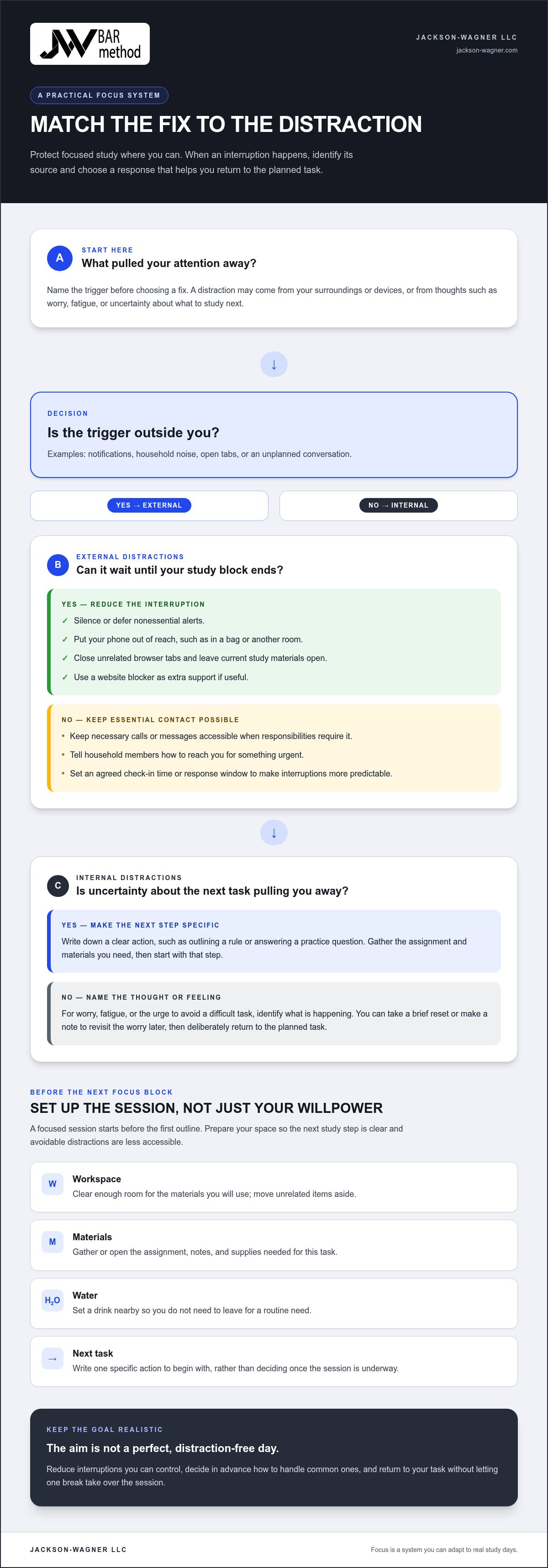
A study distraction is anything that pulls your attention away from the learning task you planned to do. It might be a phone alert, a conversation, or a thought about an unrelated obligation. Some interruptions come from outside your control. Others begin internally, with worry, fatigue, or the urge to avoid a difficult task. Recognizing the difference helps you choose a useful response instead of treating every lapse in focus as a personal failure.
Each time you switch away from a rule outline, essay, or practice question, you have to reorient yourself before resuming. You may need to reread a prompt, find your place in your notes, or recall what you were trying to understand. Those small resets can make a study block feel scattered, even when you’ve spent substantial time at your desk. Reading about attention span can offer helpful context, but your plan should account for your own concentration and circumstances.
Bar preparation can also create internal friction. If you’re unsure what to study next, deciding on a task can become a distraction of its own. Fear of falling behind may lead you to check your schedule repeatedly instead of working through the assignment in front of you. Name the trigger, then respond deliberately: clarify the next task, take a brief reset, or make a note to revisit the worry later.
A useful focus plan reduces avoidable interruptions and makes it easier to recover deliberately when interruptions happen.
Which distractions most often interrupt bar preparation?
Common external distractions include notifications, household noise, open browser tabs, and unplanned conversations. Internal triggers can be just as disruptive: uncertainty about what to study next, fatigue, or fear that you’re falling behind. Work and caregiving responsibilities can also make a completely interruption-free day unrealistic. Instead of waiting for ideal conditions, identify the interruptions you can reduce and decide how you’ll resume after the ones you can’t.
Why willpower alone is an unreliable focus strategy
Relying on self-control means resisting your phone, tempting websites, and nearby chores while they remain easy to reach. That’s a fragile setup, especially when you’re tired or facing a demanding task. Some interruptions are unavoidable, and they don’t mean you’ve failed. Separate those from preventable disruptions, then adjust your surroundings and task plan before studying. Put likely temptations out of reach and define a clear first step, so beginning takes less negotiation.
The goal isn’t to eliminate every distraction. It’s to make focused work easier to start, protect attention where you can, and return to the planned task without letting an interruption take over the session. This turns focus from a test of willpower into a practical system you can adapt to real study days.
How to Set Up a Bar Study Environment That Protects Focus
A focused session starts before you open the first outline. A simple setup routine reduces small decisions and interruptions, so your attention goes to the task instead of searching for materials or silencing alerts. The best environment isn’t necessarily a perfect, silent room. It’s a space arranged to make the next study step easy and avoidable distractions less accessible.
Before each session, run through this short checklist:
- Workspace: Clear enough room for the materials you’ll use, and move unrelated items aside.
- Materials: Open or gather the assignment, notes, and supplies you need for this task.
- Water: Set a drink nearby so you don’t need to leave for a routine need.
- Next task: Write down a specific action, such as outlining a rule or answering a practice question.
Keep essential notifications available; silence or defer alerts that can wait until your study block ends. You can protect your attention without making yourself unreachable when someone genuinely needs you.
Reduce phone, browser, and notification interruptions
Before starting, use your device’s focus settings or notification controls for the block you’ve planned. Keep necessary calls or messages accessible if your responsibilities require it, and silence nonessential alerts. Place your phone out of reach, such as in a bag or another room. Close unrelated browser tabs, leaving only the materials for your current assignment open. A website blocker can add support, but clear task boundaries still matter.
Choose a study space and make interruptions predictable
A quiet room at home may be convenient, while a library can provide separation from household activity. Another suitable location may work better if it’s comfortable and has the resources you need. Choose based on likely noise, access, and how easily you can stay with the task. Keep frequently used items within reach, and use a visible availability cue or agreed check-in time to make interruptions more predictable.
Boundaries work best when people around you know what they mean. Tell household members when you’re studying, how they can reach you for something urgent, and when you’ll be available again. With colleagues or study partners, agree on a response window rather than leaving messages open as a constant invitation to switch tasks. If you share a space, a closed door, a sign, or headphones can signal that you’re in a focused block. An agreed check-in gives others a clear alternative to interrupting.
These small choices create a repeatable setting instead of asking willpower to do all the work. If you’re building a larger plan around focused sessions, structured California bar preparation can give your study tasks a clearer sequence. Use that structure alongside practical environment changes that make it easier to begin and stay with each task.
Match the Fix to the Distraction: Digital, Environmental, or Internal
There isn’t one fix for every interruption. A phone setting won’t quiet a noisy room, and moving to a library won’t resolve uncertainty about what to study next. To learn how to minimize distractions during bar study, identify what pulled you away, then choose a response that addresses that trigger. Keep a fallback ready for times when the first solution isn’t practical.
| Distraction type | Likely trigger | Practical response | Fallback |
|---|---|---|---|
| Digital | Alerts, messages, or tempting websites | Silence nonessential notifications, close unrelated tabs, and set limited check-in windows. | Use a temporary blocker or put the device out of reach. |
| Environmental | Noise, conversation, or activity nearby | Try a quieter location or agree on a quiet period with others. | Pause to note your place, then resume when the interruption passes. |
| Internal | Worry, restlessness, or an unclear task | Write down the thought and define one observable next action. | Take a planned short break, then return to that action. |
When the distraction comes from a device or environment
For alerts, silence what isn’t essential and choose specific windows to check messages, rather than glancing at your phone whenever it lights up. Close tempting tabs before beginning. If that isn’t enough, a temporary website or phone blocker can add friction. For noise or interruptions, change locations when practical or agree on a quiet period. Tools help, but they work best when you’ve also defined the purpose of the study block.
When worry, restlessness, or unclear tasks break concentration
Don’t try to settle every thought before studying. Jot down a distracting concern in a few words, then return to the task you chose. Replace “study Evidence” with an action you can see when it’s done, such as “answer one practice question and review the explanation.” If your attention fades, take a planned short break instead of switching impulsively to unrelated browsing or chores.
A vague assignment can invite avoidance because it leaves you deciding what to do at every step. A specific task gives you a clear starting point and a way to tell whether you’ve completed it. For example, change “work on essays” to “read one essay prompt, outline the issues, and compare the outline with the sample answer.” Keep the task manageable enough to begin, but meaningful enough to move preparation forward.
Try the response that fits the trigger, then adjust if it doesn’t help. If ongoing focus friction points to broader executive functioning hurdles, resources like The ADHD Field Guide offer interactive tools and self-checks designed to help individuals explore neurodivergent patterns. Bar preparation can be demanding, and seeking appropriate support is a practical step, not a personal failing.
A Step-by-Step Bar Study Session for Fewer Interruptions
A productive study session doesn’t require a perfect day. It needs a clear task, a realistic boundary around your attention, and a simple way to resume when something unexpected happens. This sequence turns how to minimize distractions during bar study into a routine you can adapt to your schedule, rather than a rigid plan that falls apart at the first interruption.
- Choose one measurable task. Define what you’ll complete, such as outlining a specific issue, reviewing missed questions, or drafting an essay plan. “Study contracts” is too broad to guide your next action.
- Prepare your materials. Open the relevant assignment, notes, and any reference materials you need. Keep a small parking list nearby for unrelated tasks or thoughts, so you can record them without acting on them.
- Set a bounded work block. Estimate a reasonable amount of time based on your concentration, the task, and the time available. Decide on a clear stopping point before you begin, and schedule a break or device check rather than leaving it open-ended.
- Begin with the first action. Start answering, outlining, or reviewing. Don’t wait to feel perfectly focused. Starting with one defined step helps you build momentum.
Plan a focused block around one measurable study task
Choose a focus interval that fits your day and how long you can comfortably stay with the work. There’s no single duration that suits every candidate or assignment. A dense rule review may call for a different block than checking answers to practice questions. Stop at your planned endpoint, take the break you scheduled, and decide whether to continue or move to the next task.
Plan device checks with the same care. If you need to remain reachable, choose a limited check-in time rather than keeping the screen in view. Write down a household errand, email, or unrelated study concern as it comes to mind, then return to the assignment. Your list can wait until the break or the end of the block.
Recover quickly when a study session gets interrupted
If you see an interruption coming, pause at a natural stopping point and leave yourself a brief note, such as “resume with question four” or “finish the final issue in the outline.” If the interruption arrives suddenly, note what happened, reread your task, and take the smallest clear next step. You don’t need to restart the whole session or make up the lost time by extending every block.
At the end of the session, look for patterns without blaming yourself. If the same interruption keeps appearing, adjust the next session’s timing, location, or communication boundary. If a block was too ambitious, narrow the task or choose a more realistic interval. A plan that can recover is more useful than one that only works under ideal conditions.
For structured preparation that gives California bar study a clearer sequence, explore JW Bar Method preparation and build each session around a defined next step.
Use Structured California Bar Prep to Sustain Focus
A defined study sequence gives each session a clear starting point. Instead of spending the first part of a study block deciding what to do, you can move directly to a planned task and focus on completing it. Structure won’t remove every interruption, but it can reduce one avoidable source of distraction: uncertainty about what comes next.
How a clear study sequence can reduce decision fatigue
“Study more” isn’t a plan. A sequence might specify which topic to review, when to practice applying it, and what to revisit based on your work. You can then begin with the next step instead of browsing for new materials or rearranging your schedule. Structure means using study time deliberately, not simply adding more hours or resources.
Make the sequence fit your actual week. If you work or have caregiving responsibilities, plan realistic blocks around those commitments rather than building a schedule that assumes every day is open. A defined task can still be useful when the available study window is short: identify what you’ll complete, then pick up the next planned task in a later session. For a broader view of California-specific planning, the California Bar Exam strategic guide can help you think through preparation as a whole.
Choose a preparation rhythm that fits your available study time
Preparation needs vary with a candidate’s timeline and background. A standard or accelerated track offers a different preparation rhythm, so consider how each aligns with your circumstances and the work ahead. Choose a track that supports a workable sequence rather than creating pressure to study at a pace that doesn’t fit your life.
Jackson-Wagner’s proprietary JW Bar Method provides structured preparation for the California Bar Examination and California Attorney’s Exam, with standard and accelerated tracks. A defined approach can help clarify the next study task, while your own setup and boundaries remain important parts of managing distractions. Coursework isn’t a substitute for planning focused sessions and adapting them to real interruptions.
If you’re considering a more structured sequence for California exam preparation, explore California bar preparation options and see what fits your preparation needs.
Start small. Choose one distraction control, such as silencing nonessential alerts or writing down the next task before you stop, and test it in your next study session. Keep what helps, adjust what doesn’t, and build a focus routine you can sustain.
Make Your Next Study Session Easier to Protect
You don’t need to overhaul your routine all at once. Choose one distraction that regularly interrupts your work and make one practical change before your next session. Treat it as an experiment: notice whether it helps you stay with the task, then keep or adjust the change. Small, repeatable improvements can make focused study feel more manageable, even when your schedule isn’t perfect.
Learning how to minimize distractions during bar study is part of building a preparation routine you can sustain. The next step may be strengthening your study plan so each session has a clear direction and fits your available time. Explore California bar preparation with Jackson-Wagner to see whether a structured approach aligns with your goals.
Protect the next block, not every moment. Start with one clear task, use the focus boundary you chose, and give yourself credit for returning when attention wanders. You can build a steadier study routine one session at a time.
Frequently Asked Questions
How do I stop checking my phone while studying for the bar?
Make checking your phone a planned choice rather than an automatic response. Before you begin, decide whether you need to be reachable for anything urgent, then adjust your settings accordingly. For example, leave calls from designated contacts available while silencing social and shopping alerts. If you catch yourself reaching for the phone, note what prompted it and return to your work. This can help you learn how to minimize distractions during bar study without relying on willpower alone.
Is the Pomodoro Technique effective for bar exam studying?
It can be useful if timed work periods and scheduled pauses help you get started, but the technique isn’t a requirement for effective studying. Test it with a defined assignment, such as reviewing missed multiple-choice questions, and check whether you complete the planned work. If the timer interrupts complex analysis, try a longer block or use a natural stopping point. Keep breaks intentional, then return to the next task on your plan.
How can I study for the bar exam while working full time without distractions?
Build study time around your actual workday instead of expecting to maintain the same routine as someone studying full time. You might choose a short review task before work and reserve a more demanding assignment for a time when you’re less tired. Prepare the task in advance, and leave yourself a note about where to continue. If a work issue takes priority, adjust the plan rather than treating the missed block as a failed day.
What should I do when anxiety distracts me during bar study?
Pause and turn the concern into a next step you can act on, such as marking a topic to review or writing down a question for later. Then work on one manageable part of the assignment instead of trying to resolve every worry during the session. A brief reset, such as standing up and taking a few slow breaths, may help you reorient. If anxiety persists or substantially affects daily life, consider appropriate professional support.
Are study apps enough to eliminate distractions during bar prep?
No single app can address every reason a study session gets interrupted. A blocker may restrict selected websites, but it won’t decide which assignment deserves your attention or prevent someone from entering a shared room. Use an app to support a specific boundary, then assess its usefulness by whether you completed the task you chose. If you spend time adjusting settings instead of studying, simplify the controls or use a non-digital reminder.
How do I get back on track after an interruption while studying?
Return at the next practical opportunity by finding your place and restarting with one small action, not by trying to recreate the session you planned to have. For example, reread the last paragraph you drafted, then continue with the next point. If you were interrupted during a practice question, mark the step you reached before handling the interruption. Later, consider whether that type of disruption calls for a change to your schedule or setup.
Should I study in complete silence for the bar exam?
No. Choose the sound level that lets you work steadily on the task at hand. You could compare a quiet room with a library or another low-distraction setting, then note where you complete focused work more comfortably. If background noise is unavoidable, consistent low-level sound may be preferable to frequent conversation nearby. Keep the comparison practical: use the same kind of assignment in each setting and judge by your ability to finish it.


