

You can’t know how you performed just by replaying the exam. Learning how to cope with waiting for bar results means questioning anxious assumptions, caring for your health, and focusing on what you can control while the outcome is unknown.
It’s understandable to second-guess answers, compare notes, or keep checking for updates. These habits can make the wait feel harder without giving you a reliable picture of your result. You don’t have to force certainty or pretend you aren’t worried. You can make room for uncertainty while choosing where to direct your attention.
This guide offers practical ways to interrupt anxious thoughts, build a steady routine, and support your physical well-being. It also explains how mindfulness and connection with people you trust can help you stay grounded, whatever the results bring.
Key Takeaways
- Separate what you know about your exam performance from what anxiety is telling you, and choose when to check for updates.
- Build a manageable routine that supports sleep, regular meals, movement, and time outdoors.
- Notice anxious thought loops and use practical ways to interrupt them before they take over your attention.
- Practice making room for uncertainty with mindfulness and support from people you trust.
1. Avoiding assumptions about exam performance based on feelings
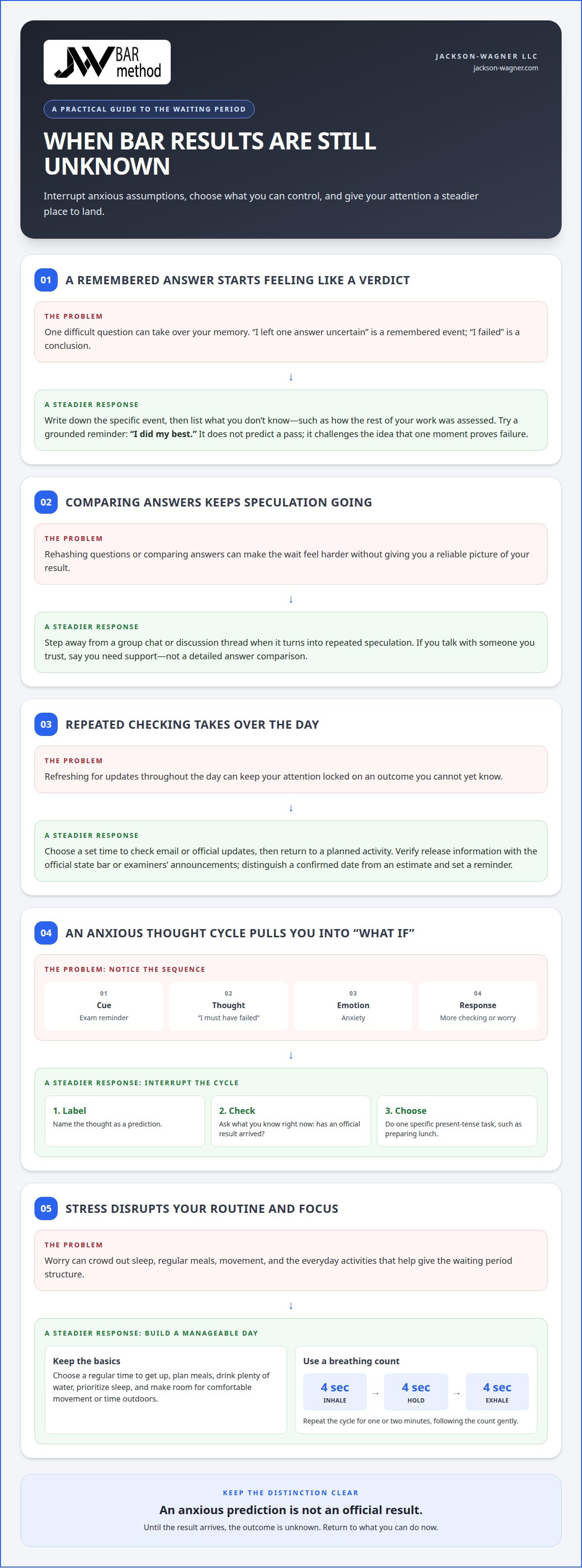
After the bar exam, one difficult question can feel more important than it was. Replaying it won’t reveal how your overall performance will be evaluated. Separate what you remember from what you’re predicting: “I left one answer uncertain” is a memory; “I failed” is a conclusion. That distinction can help you avoid treating anxiety as a score report.
Try a brief fact check when a negative thought appears. Write down the specific event, such as losing time on an essay, then note what you don’t know, including how the rest of your work was assessed. You can also use a grounded statement such as “I did my best” or “My worth isn’t defined by one outcome.” These phrases don’t predict a pass; they challenge the idea that one remembered moment proves failure.
Limit exam rehashing if comparing answers makes you more anxious. For example, leave a group chat or close a discussion thread when it turns into repeated speculation about particular questions. If you want to talk, tell a trusted friend you need support rather than a detailed answer comparison.
Make checking for results intentional. Choose a set time to check email or official updates, then return to a planned activity instead of refreshing throughout the day. To verify a release date, consult the official state bar or examiners’ announcements, and distinguish a confirmed date from an estimate. Set a reminder for the relevant update rather than relying on repeated searches.
Retake costs and deadlines depend on the jurisdiction and exam administration. Use the relevant authority’s registration schedule for the applicable fee and filing deadline. If you think you failed, avoid deciding based on a few remembered answers. Wait for the official result, then use it to decide whether to plan a retake and what preparation to adjust.
2. Caring for physical health during stressful periods
A simple daily routine can give the waiting period some structure. Choose a regular time to get up, plan meals, and make room for an activity you enjoy. For example, take a walk, cook dinner, or return to a hobby you paused during exam preparation. Keep the plan manageable so it supports your day instead of becoming another test to pass.
When tension builds, try a brief breathing exercise: inhale for four seconds, hold for four seconds, then exhale for four seconds. Repeat the cycle for one or two minutes, following the count gently without forcing a deeper breath. This gives you a practical focus when your attention keeps returning to the results.
Protect the basics. Prioritize sleep, eat regular meals, and drink plenty of water rather than letting worry about results disrupt your routine. Add comfortable movement, such as stretching, cycling, or taking a walk outside. If you spend most of the day indoors, step outside when possible, even for a short break between tasks. Exercise, healthy eating, and regular rest can all support stress management.
Use professional development to give your attention a constructive direction, not to fill every hour. Choose one useful task, such as updating your résumé, attending a webinar, or reading about a practice area that interests you. A focused activity can restore a sense of progress while you wait, without requiring major career decisions before results arrive.
Networking can also add structure and connection. Consider a law school event, bar association mixer, or volunteer activity that fits your energy and schedule. You might set a small goal, such as introducing yourself to one practitioner or asking a speaker about their work. If career tasks start to feel like pressure, return to a restorative activity and try again when you’re ready. Aim for a balanced routine that includes care, connection, and purposeful steps.
3. Recognizing and interrupting anxious thought cycles
An anxious thought cycle can start with a cue, such as seeing an exam reminder. Your mind may jump from “I haven’t heard anything” to “I must have failed.” Notice the sequence: cue, thought, emotion, and response. Naming each part can help you see that a fear is a thought, not new information about your result.
Use a brief interruption when the cycle starts. First, label the thought as a prediction. Next, ask what you know right now, such as whether an official result has arrived. Then choose one specific action, like preparing lunch or completing a small household task. This shifts your attention from imagined outcomes to something you can do in the present.
Repeated “what if” questions can keep worry active. If you catch yourself asking, “What if I can’t move forward?”, write down the concern and identify one manageable response. You might note that you’ll review your options after receiving the official result. Put the note away afterward instead of trying to solve every possible outcome today.
The waiting period can also give you space to reflect on career interests without making a rushed decision. Write down practice areas that genuinely interest you, tasks you enjoyed during law school, and skills you’d like to use. For example, compare your interest in client counseling with your enjoyment of legal research. Treat this as exploration, not a requirement to settle your entire career path before results arrive.
Support is a practical resource, too. Talk with a trusted friend, family member, mentor, or classmate, and tell them whether you need someone to listen or help shifting your focus. If anxiety feels overwhelming or interferes with daily life, reach out to a mental health professional. These supports can help you manage distress while you wait, without requiring you to predict the result.
Bar exam takers can practice mindfulness through meditation, breathing exercises, or quiet reflection. These practices can help ease anxiety and regain perspective during the wait.
4. Accepting uncertainty while waiting for results
Until the official result arrives, the outcome is unknown. Acceptance doesn’t mean assuming you passed or failed. It means noticing the urge to predict, then returning your attention to what’s available now, such as a meal, conversation, or planned task. You can acknowledge, “I don’t know yet,” without making uncertainty disappear. Learning how to cope with waiting for bar results means making room for that honest answer.
Mindfulness can create a pause. Try quiet reflection, meditation, or a breathing exercise, focusing on each breath rather than judging it. When your thoughts drift to the result, notice the distraction and gently return your attention. The practice isn’t about preventing every worried thought; it gives you a way to regain perspective when one thought starts taking over.
Planning for both outcomes can ease the pressure to solve everything in advance. Write a brief two-part note: if you pass, identify one next step, such as reviewing bar admission logistics; if you don’t, plan to seek tailored guidance and consider how your preparation could change. Keep each plan short, then set it aside until the result gives you information to act on.
To support a friend or partner, ask what kind of support they want before offering advice. You could suggest a walk, share a meal, or recognize the effort it took to complete the exam, without making the occasion depend on the result. If they want to discuss possibilities, listen without treating their worries as evidence of a particular outcome.
If you’re deciding how to cope with waiting for bar results, focus on one useful choice you can make today, rather than trying to control the result. If a future exam becomes part of your plan, explore structured bar exam preparation from Jackson-Wagner LLC to consider an approach suited to your next study period.
Jackson-Wagner
Jackson-Wagner LLC offers structured preparation for candidates planning their next step after California Bar Exam results. If you don’t pass, a focused course can help you prepare for another attempt. For an upcoming exam, options include full-exam and Attorney’s Exam courses, with standard and accelerated programs.
Choose based on the exam you need to take and the study timeline that fits your circumstances. Options include JW Bar Method Prep - Full Exam California Bar, JW Bar Method Prep - Attorney’s Exam California Bar, JW Bar Method Accelerated Prep - Full California Bar Exam, and JW Bar Method Accelerated Prep - Attorney’s Exam California Bar.
If you’d like to discuss preparing for the California Bar, contact Jackson-Wagner LLC.
Choose your next step when the time is right
The wait doesn’t have to decide what comes next. For now, focus on the choices that remain yours: how you spend today, who you lean on, and when you’re ready to make a plan. Learning how to cope with waiting for bar results also means pausing before treating uncertainty as a verdict. When the official result arrives, you can respond to what it actually says rather than what worry predicted.
If your next step involves preparing for a California bar exam, Jackson-Wagner’s preparation courses can help you build a plan for that goal. You don’t need to have every decision settled before asking about your options. Contact Jackson-Wagner LLC to discuss your bar preparation needs.
Take the next step at your own pace. You’ve already completed a demanding exam, and you can meet the next stage with care and purpose.
Frequently Asked Questions
What can you do to manage anxiety while waiting for bar exam results?
Give uncertainty a defined place in your day instead of letting it direct every decision. For example, write down one concern and one action you can take now, such as organizing your calendar or arranging a low-key evening with someone you trust. If anxiety starts disrupting ordinary responsibilities or feels overwhelming, consider speaking with a mental health professional for individualized support.
How do you set healthy boundaries around checking for bar exam results?
Choose a specific time to review official messages, and make that your only routine check. Turn off nonessential email or browser notifications, and avoid keeping the results page open while you work or rest. If an official update arrives outside your chosen time, you can still respond to it. The boundary is meant to reduce automatic checking, not prevent you from receiving important information.
When should you start applying for jobs while waiting for bar results?
You can explore roles and prepare application materials before results arrive, especially if your job search has its own timeline. Update your résumé, identify positions that interest you, and note any licensing requirements in each posting. Be clear about your current exam status, and make decisions about roles that require bar admission based on your official result and the employer’s stated criteria.
What mental health resources are available for bar exam stress?
Talk with a trusted friend, family member, mentor, or classmate. If anxiety feels overwhelming or interferes with daily life, reach out to a mental health professional. Academic achievement and bar exam support can also offer tailored guidance after an unsuccessful result.


