

Typing may be faster, but that doesn’t make it the automatic choice for the bar exam. The pros and cons of handwriting vs typing the bar exam depend on more than speed: each method affects how you organize an answer, retrieve information, and stay focused under timed conditions. Practice both, then choose the method you can sustain while producing clear, complete work.
It’s understandable to favor the format that feels quickest. Typing can make drafting and revising easier, while handwriting can slow you down enough to help you select what matters and avoid device distractions. The useful comparison isn’t which method looks faster in a short practice session, but which one helps you perform consistently through a full exam.
This article compares speed, retention, organization, searchability, and the practical trade-offs of each format. You’ll also learn how to practice both methods before exam day, so your decision is based on timed writing experience rather than assumption.
Key Takeaways
- Compare how quickly you can produce clear, complete timed answers in each format, not just how fast you can type or write.
- Consider how you retain information and organize notes: digital files are easier to search and back up, while paper notes avoid device notifications.
- Practice both methods during bar preparation so you can judge your stamina, legibility, and ability to work under exam conditions.
- Choose the format that best supports your focused, consistent performance, then build your preparation around the California Bar Exam you plan to take.
Typing speed and information retention
Typing can produce more text quickly, while handwriting can encourage selective, active note-taking. Compare both under timed conditions, because response length alone doesn’t show whether an answer is complete or substantive.
Typing Speed and Response Length
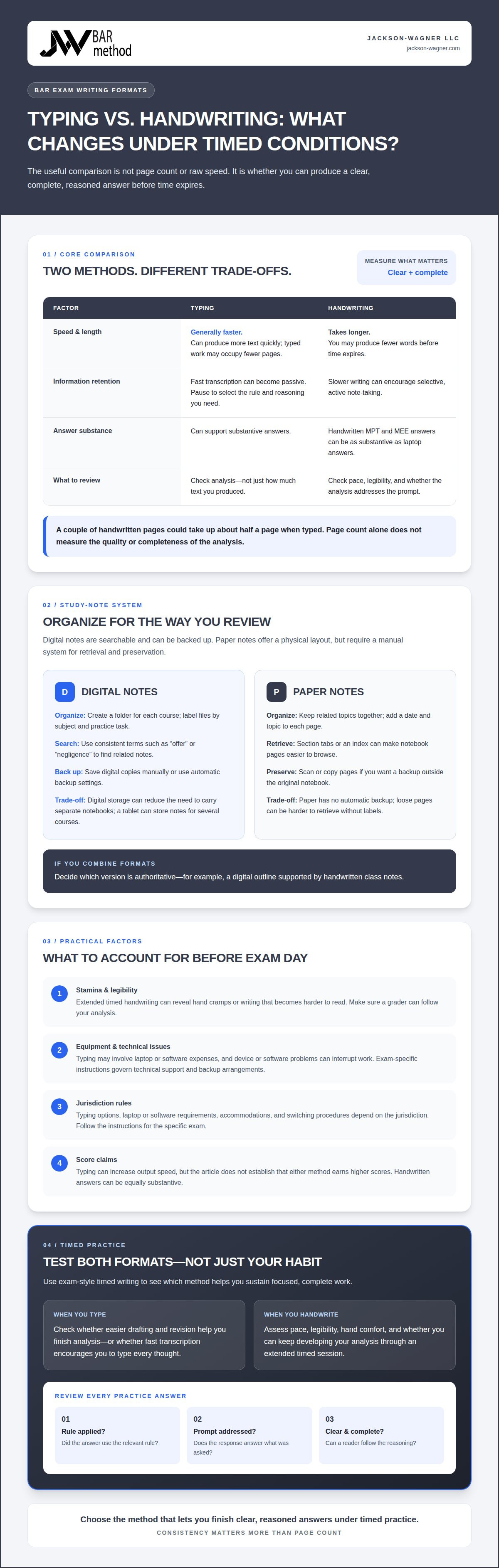
Typing is generally the faster note-taking method, and a couple of handwritten pages could take up about half a page when typed. That difference can make a typed response look shorter on paper, but page count alone doesn’t measure its analysis. Typed notes may also be less memorable when fast transcription replaces selecting key points. Pause to identify the rule and reasoning you need, rather than typing every thought.
Handwriting Speed and Substance
Handwriting takes longer, so candidates may produce fewer words before time expires. Yet handwritten MPT and MEE answers can be as substantive as laptop answers. The useful comparison is whether each timed response applies the relevant rule and addresses the prompt, not whether it fills more pages. Review practice essays for missing analysis as well as legibility and pace.
| Option | Speed and length | Retention | Response substance |
|---|---|---|---|
| Typing | Faster; often fewer pages | Can encourage passive transcription | Can support substantive answers |
| Handwriting | Slower; may fill more pages | Can reinforce selective note-taking | Can support substantive answers |
Choose the method that lets you finish clear, reasoned answers under timed practice, not the one that produces the most pages.
Speed and essay scores: Typing can increase output speed, but handwritten MPT and MEE answers can be equally substantive. These facts don’t establish that either method earns higher scores.
Laptop and software: Requirements depend on the jurisdiction’s exam instructions. Use the specified setup for the exam you’re taking.
Accommodations: Requests to type or handwrite under an accommodation follow the jurisdiction’s procedures. The applicable instructions govern eligibility, timing, and documentation.
Switching methods: Don’t assume you can switch during a session. Exam procedures determine whether switching is allowed, so practice both methods beforehand.
Handwriting legibility: Write clearly enough for a grader to read your analysis. Handwritten answers can be substantive, but unclear writing may obscure your reasoning.
Jurisdiction differences: Typing options and rules can vary by state or jurisdiction. Follow the instructions for the specific exam you plan to take.
Fees: Typing may involve laptop or software expenses; handwriting has no handwriting-related equipment costs. Any exam-related charges depend on the applicable jurisdiction.
Technical problems: Device or software problems can interrupt typing. Exam-specific procedures govern technical support and backup arrangements, so don’t assume a particular recovery process.
Note organization and searchability
Typed notes can be grouped by course, doctrine, or assignment, then found with a search term. For example, searching “offer” can surface relevant notes across a digital folder faster than flipping through pages. This can be useful during bar exam preparation, when finding a rule quickly can help structure a practice answer.
Digital storage also reduces the need to carry separate notebooks. A tablet can store notes for several courses on one device instead of requiring a separate notebook for each. Computers can back up notes manually or automatically, depending on the setup. A backup can preserve access if the original device or file becomes unavailable.
- Organize: Create a folder for each course, then label files by subject and practice task.
- Search: Use consistent terms, such as “negligence” or “consideration,” so a keyword search returns useful notes.
- Back up: Save digital copies manually or use automatic backup settings.
- Preserve paper: Scan or copy notebook pages if you want a backup outside the original notebook.
Paper notes offer a physical layout that some students find easier to scan visually. But paper has no automatic backup unless you scan or copy it. A handwritten outline in one notebook may be easy to browse with section tabs; loose pages can be harder to retrieve without labels. Add a date and topic to each page to make later review more organized.
Choose a system you can maintain throughout preparation. If you type, use the same folder and file-naming pattern for each course, then test searches before a study session. If you handwrite, keep related topics together and create an index. If you combine formats, decide which version is authoritative, such as a digital outline supported by handwritten class notes. A consistent system makes review more purposeful, whether you prefer searching a device or turning to a marked notebook.
Practicing both handwriting and typing
Practice both formats during bar preparation instead of choosing from habit alone. Timed essays reveal whether typing helps you finish your analysis or encourages rushed transcription. Handwritten practice shows whether your pace, legibility, and hand comfort hold up as you write. Repeated exam-style practice can help you spot issues such as hand cramps or increasingly illegible writing.
If handwriting is your likely choice, practice writing for an extended, timed session. This can expose problems that a short essay may not reveal. Notice whether your writing becomes harder to read, whether your hand cramps, and whether you can keep developing your analysis. A timed MEE answer, for example, lets you assess both pace and legibility.
Use each practice session to test a specific skill, rather than merely producing more pages. Follow this sequence:
- Set the format. Choose handwriting or typing before starting a timed essay, then use that method throughout the exercise.
- Work under time pressure. Answer an MPT or MEE prompt with the same focus you need for an exam response.
- Review the result. Check whether the answer addresses each issue and explains its reasoning. For handwriting, also confirm that the text remains readable.
- Repeat in the other format. Use a comparable prompt and compare completion, clarity, and comfort, not just page count.
Keep brief notes after each attempt: record where you lost time, whether revisions were manageable, and whether your final answer stayed clear. For example, a typist might notice lengthy edits, while someone handwriting might see cramped writing near the end. Those observations identify what to improve before the next timed exercise.
Practicing both formats also builds flexibility if circumstances require a change in method. It doesn’t mean switching during the exam is automatically allowed; exam procedures govern that. The value is knowing how each format feels under pressure and having practiced producing a complete answer in either one. Use your timed work to choose the method that supports consistent writing.
What are the pros and cons of handwriting versus typing the bar exam?
Neither format guarantees a stronger bar exam essay. The pros and cons of handwriting vs typing the bar exam are best judged by how each method affects your work. Candidates have a fairly equal chance of becoming licensed attorneys whether they handwrite or type their essays. Typing supports faster drafting and easier edits. Handwriting avoids device notifications and equipment costs associated with typing, but offers fewer digital conveniences.
- Typing: Faster text entry can help you capture analysis, and editing can make revisions easier. The trade-offs include possible noise from other typists and reliance on a device.
- Handwriting: Paper avoids device notifications and typing-related costs. The trade-offs include slower writing and no automatic backup for paper notes unless you scan or copy them.
The testing room can also shape your experience. Laptop candidates may sit alongside one thousand other examinees in a stadium-sized room, where the sound of a thousand typists may distract. Handwriting candidates may be placed in classrooms designed for approximately 35-50 people. These settings can affect comfort and concentration, but don’t determine the quality of your analysis.
Use practice essays to weigh these trade-offs. If typing lets you finish but keystrokes or device distractions disrupt your concentration, test whether handwriting helps you focus. If handwritten work becomes difficult to read or complete, timed typing practice can show whether a laptop improves your process. Compare issue coverage, reasoning, clarity, and completion, not page counts alone.
Make the final choice based on the method that supports clear, complete work under timed conditions. The pros and cons of handwriting vs typing the bar exam should guide your practice, not assumptions that faster typing means a higher score or handwriting automatically improves recall. Compare your own timed essays and choose the format that fits your performance.
For structured preparation around the California Bar Exam, explore California Bar exam preparation.
Jackson-Wagner
Jackson-Wagner LLC helps California Bar candidates prepare with structured courses for the full exam and the Attorney’s Exam. Its JW Bar Method offerings include standard and accelerated preparation tracks, giving candidates options suited to different study timelines and backgrounds.
If you’re still weighing handwriting against typing, use timed practice to identify the format that supports clear, complete answers. Then build that choice into a consistent preparation plan, including focused work on essay writing and exam skills. Jackson-Wagner LLC’s California Bar preparation programs support candidates preparing for the full exam or the Attorneys’ Exam.
Contact Jackson-Wagner LLC to discuss California Bar exam preparation.
Make your exam approach part of your plan
Turn your decision into a deliberate part of your bar preparation. The pros and cons of handwriting vs typing the bar exam matter most when they shape how you practice, organize your work, and prepare to write under pressure. Choose a format based on your timed performance, then make it consistent with the preparation path you’ll follow.
If you’re preparing for the California Bar Exam, Jackson-Wagner LLC offers structured preparation through the JW Bar Method. Choose a full exam or Attorneys’ Exam program, with standard and accelerated options available. The fully online courses provide a structured path for your broader exam preparation as you refine your writing approach.
Take the next step with a plan that fits your exam path. Contact Jackson-Wagner LLC to discuss preparation, and move forward with clarity and purpose.
Frequently Asked Questions
Should I Write or Type the Bar Exam?
Choose the format in which you can produce a clear, complete answer under exam conditions. Use a timed practice essay to test your decision, then review whether you finished, addressed the prompt, and could read your work easily. If your results are close, consider which format feels more reliable when you’re tired or need to revise an answer. Your practice record is more useful than assumptions about which method is universally better.
Can bar exam applicants choose between handwriting and typing?
Applicants may choose between handwriting and typing when their jurisdiction permits both options, but the available formats and selection process vary. Read the instructions for your specific exam before planning your response method. For example, an applicant who expects to type should determine how the exam requires that choice to be made. Don’t assume you can change formats during the exam; follow the jurisdiction’s procedures and any applicable accommodation process.


