

One bad exam doesn’t automatically ruin your grade. Its impact depends on how much the exam counts and what assessments remain: for example, an 88% average followed by a 65% on an exam worth 20% becomes an 83.4% average. Learning how to recover from a bad exam session starts with separating the disappointment from the next steps you can control.
It’s normal to feel frustrated, anxious, or uncertain after a difficult test. But one result isn’t a verdict on your ability, and reacting in a panic can make it harder to see what needs to change.
This guide will help you regain perspective, review what went wrong, and adjust your preparation with manageable steps. You’ll also learn how to rebuild motivation and find support, so you can approach your next exam with a clearer plan.
Key Takeaways
- Pinpoint whether the exam exposed gaps in knowledge, application, or time management, then target the biggest issue first.
- Give yourself room to process the result before making a plan, and use a simple reset to regain focus.
- Bring specific questions to a teacher, mentor, or support resource so you can turn mistakes into a practical next step.
- If you’re preparing for the California Bar Exam, explore whether JW Bar Method Prep - Full Exam California Bar fits your study needs.
How should you change your study methods?
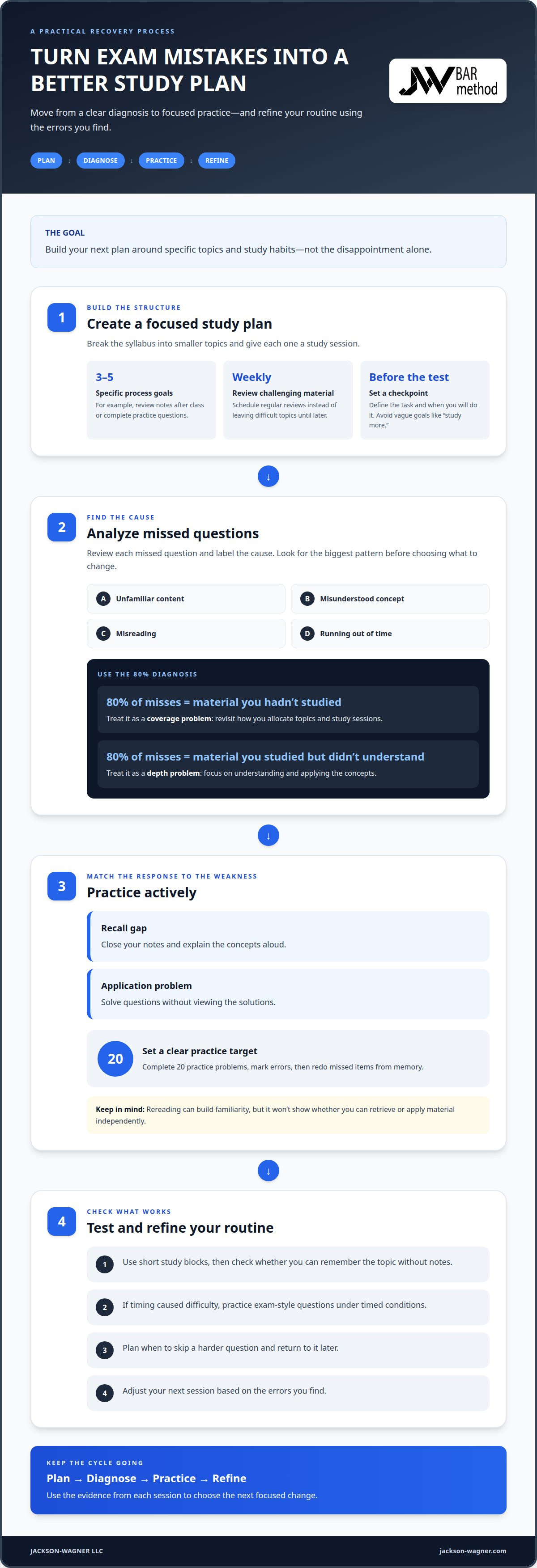
If you’re wondering how to recover from a bad exam session, use the experience to identify what needs to change. Build your next plan around specific topics and study habits, rather than the disappointment alone.
-
Create a Structured Study Plan
Break the syllabus into smaller topics and assign each one a study session. Set three to five specific process goals, such as reviewing notes after class or completing practice questions. Schedule weekly reviews for challenging material and a checkpoint before your next test. Avoid vague goals like “study more.” Define the task and when you’ll do it.
-
Analyze Missed Questions and Study Gaps
Review missed questions and label each cause: unfamiliar content, a misunderstood concept, misreading, or running out of time. If 80% of missed questions covered material you hadn’t studied, treat it as a coverage problem. If 80% covered material you studied but didn’t understand, treat it as a depth problem. This diagnosis helps you choose a focused response.
-
Adjust Study Methods to Weaknesses
Match each weakness to active practice. For recall gaps, close your notes and explain concepts aloud. For application problems, solve questions without viewing solutions. Set a clear target, such as completing 20 practice problems, then mark errors and redo missed items from memory. Rereading can build familiarity, but it won’t show whether you can retrieve or apply material independently.
- Test and refine your routine. Use short study blocks, then check whether you can remember the topic without notes. If timing caused the struggle, practice exam-style questions under timed conditions and plan when to skip and return. Adjust your next session based on the errors you find. Knowing how to recover from a bad exam session means changing the method that caused difficulty. If you’re in immediate danger in the United States, call 911, according to the Federal Communications Commission.
How can I stay motivated after failing an exam?
Give yourself time to process the result before deciding what to do next. While waiting for results, limit score speculation: set aside a specific time to think about it, then redirect your attention to something useful.
-
Manage Emotions and Immediate Self-Care
Take a cooling-off period of about a day before making major decisions. Feeling frustrated or angry after a difficult exam is normal, but panic can push you toward an unhelpful response. Step outside for a 20-minute walk, get fresh air, or have a conversation with someone you trust. Keep some non-academic time in each week, too. Rest and a healthy snack can help you reset before deciding what to do next. A small act of care is a useful first action, not a reward you must earn.
-
Manage Test Stress and Panic
When stress rises, pause and use slow breathing for 30 seconds. Focus on the next action, not every possible consequence of the exam. For your next test, practice under timed conditions so the format feels more familiar. During the exam, start with questions you know, and mark harder ones to revisit. These steps give you a plan to follow when panic interrupts concentration, instead of letting one difficult question consume your time. Practicing this response can also help you approach the next session with a clearer routine.
-
Move On While Waiting for Results
Set a limit on score speculation. Talk it through briefly with a friend, then move on to a planned activity instead of replaying each answer. Write down one lesson you can act on later and leave the rest until the results arrive. One test reflects a single performance, not your full ability. Learning how to recover from a bad exam session means focusing on what you can control. If results are still pending, keep to your routine and note one next step for when the score arrives.
Seeking support for mental health, learning differences, or external challenges
Retake and appeal rules depend on the school or exam administrator. Check the applicable handbook and syllabus promptly for procedures, deadlines, and required documentation.
Seek a tutor or academic adviser if a specific learning gap persists. If distress disrupts daily life or learning, speak with a mental health professional.
-
Recognize When Support May Be Needed
Notice whether stress keeps interfering with sleep, schoolwork, or daily responsibilities. Write down the challenge affecting preparation, such as caregiving, illness, or difficulty following the exam format. Then identify the support you need, like a conversation with an adviser or help understanding learning accommodations. If you’re experiencing suicidal thoughts or an urgent crisis in the United States, call or text 988 for crisis support, according to the Substance Abuse and Mental Health Services Administration.
-
Seek Teacher Feedback and Academic Support
Bring the graded exam to office hours and ask the instructor to identify specific errors. Ask which concepts to review and what strategies could improve your next exam. If the format or instructions caused difficulty, clarify how to approach similar questions. Study groups, campus tutoring, or supplemental instruction can provide structured practice. For example, bring a missed problem and explain your approach so a tutor can pinpoint where your reasoning shifted.
- Choose support that fits the obstacle. A tutor can help with course material; an adviser can discuss school resources and academic options. If you’re supporting a child, listen to their concerns before discussing a plan. Acknowledge their effort, ask what felt hardest, and agree on one practical change. Avoid scolding or comparing them with classmates. If an outside challenge affected their performance, explain its impact to the appropriate school contact and ask about the relevant process. Keep the next step specific, such as scheduling a conversation with the instructor or arranging focused practice.
Calming down before reviewing an exam
Separate evidence from prediction: a graded paper shows how you performed, while worry alone cannot establish your score. Take a few hours away from course materials before reviewing mistakes.
- Pause before analyzing. Step away from the exam and let the first wave of emotion settle. A short walk or quiet break can help you stop replaying answers. It’s normal to feel unsettled after a difficult session, but reviewing while upset can blur what you remember with what you fear. Choose a specific time to return to the exam rather than checking answers repeatedly.
- Review the actual evidence. When you have the exam or score, mark where you lost points and identify why. For example, distinguish a missed concept from a misread instruction or an incomplete response. If you’re still waiting for results, write down only the questions you clearly remember struggling with. Uncertainty about an answer isn’t proof that you failed.
- Turn mistakes into a short review routine. Group missed questions by topic, then revisit the weakest area first. Try active recall: close your notes and explain the concept from memory. Return to it after two days and test yourself again without looking. This helps show whether you can retrieve what you learned, rather than simply recognize familiar notes.
- Make one adjustment for the next assessment. If you misunderstood prompts, practice identifying the task words before answering. If you knew the material but struggled to apply it, solve a similar problem before checking the solution. Record the change and review its effect in your next practice session. For California Bar Exam preparation, Jackson-Wagner LLC offers a structured course to consider when you need focused preparation.
Jackson-Wagner: JW Bar Method Prep - Full Exam California Bar
Jackson-Wagner’s JW Bar Method Prep - Full Exam California Bar gives candidates a structured preparation option after a difficult exam or when planning a future attempt. If you’re preparing for the full California Bar Exam, consider whether a standard or accelerated track better suits your timeline. Candidates preparing for the Attorney’s Exam can choose between JW Bar Method Prep - Attorney’s Exam California Bar and its accelerated version.
A disappointing session may signal a need for a more organized preparation plan, especially if you’re struggling with content coverage, applying rules, or exam practice. Use your review of missed questions to identify what to work on next, then choose a course that matches your exam and preparation timeline.
Contact Jackson-Wagner to discuss the available California Bar preparation options.
Turn the Next Attempt Into a Fresh Start
Learning how to recover from a bad exam session is about choosing your next move, not reliving the last one. A disappointing result can become a turning point when you make a deliberate decision about preparation, support, or your next exam. Start with one step you can take today, such as setting a study time or writing a question for an instructor. Keep the goal realistic and build on what you complete. Momentum comes from consistent action, not from waiting until you feel completely confident.
If you’re preparing for the California Bar Exam and want a structured path forward, explore your options with Jackson-Wagner. Contact Jackson-Wagner for support and take the next step with purpose. A difficult exam doesn’t have to define what comes next.
Frequently Asked Questions
Can one bad test ruin my grade?
One test can affect your course grade, but the impact depends on the grading formula and remaining assignments. Check the syllabus for the exam’s weighting, category rules, and any replacement or dropped-score policy. Then use the gradebook to see how upcoming work could affect your standing. If the calculation isn’t clear, ask your instructor to explain the course grading system.
How can you respond to failing exams without calling yourself a failure?
Describe what happened without turning it into a judgment about yourself. For example, replace “I’m a failure” with “I didn’t finish the final section” or “I misunderstood the prompt.” This identifies a specific event you can address. Keep track of other evidence, such as completed assignments or concepts you can explain, to put one result in perspective.
How do you deal with bad exam results and protect your course grade?
Start by checking your gradebook and syllabus rather than guessing what the score means. Note the exam’s contribution, upcoming assignments, and any course policies that affect grading. Make a simple list of remaining work, due dates, and questions for your instructor. For example, ask whether the course has a specific process for recovering from a missed assignment or low exam score.
How do you deal with failing exams without treating one result as your identity?
Separate your identity as a learner from one outcome: an exam records your performance on particular tasks, not your whole character or potential. Write a neutral account of what the result shows, then add a counterexample, such as a skill you demonstrated in another assignment. If self-criticism returns, use that written evidence to describe the situation more accurately.
How do you deal with stress after failing an exam?
Give stress a practical outlet instead of repeatedly predicting your final grade. Choose a familiar activity, such as preparing a meal or tidying your desk, and return to your routine. If worry keeps interfering with sleep, relationships, or schoolwork, speak with a qualified mental health professional. Ask someone you trust to help you take that first step.
How soon should I start studying again?
Resume studying when you can focus without replaying the exam throughout the session. Start with a light task: organize upcoming course materials, list what you need to learn, or set a time to begin. Avoid using an exhausting cram session to prove you’re serious. Returning steadily to planned work gives you a more useful starting point.


