

Yes, exercising during bar study can be part of an effective preparation routine. Regular movement, whether a walk, stretching, yoga, or a short workout, can support your mood and help manage stress without taking over your study day. The goal is to fit movement around your preparation, not let it compete with it.
It’s understandable to worry that time away from your desk means falling behind. But a planned break gives you a chance to reset before returning to focused work. You don’t need an elaborate routine: start with a brief stretch between study blocks or a walk during a longer break.
Here, you’ll learn how to fit movement breaks around study sessions, plan activity around your energy, and choose between walking, yoga, stretching, and short workouts. You’ll also find guidance on exercising during bar preparation and keeping movement supportive rather than another source of pressure.
Key Takeaways
- Build short movement breaks into study sessions to reset your attention without letting breaks take over the day.
- Plan study and activity around your energy, and make a realistic routine before the day gets busy.
- Choose movement that fits the moment, from a walk or stretch to yoga or a short workout.
- When you need structured preparation for the California Bar Exam, explore JW Bar Method Prep - Full Exam California Bar.
1. Movement breaks during study sessions
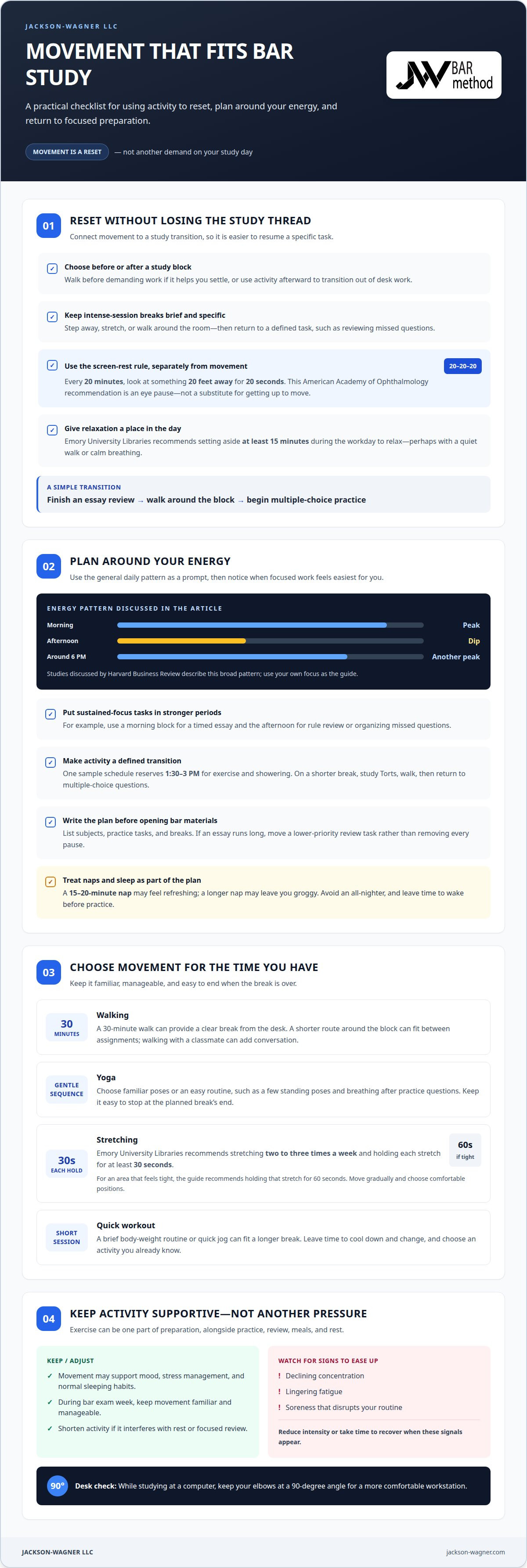
Yes, exercise can fit before or after bar exam study sessions. Choose the timing that best supports your focus: take a walk before a demanding study block if movement helps you settle, or use activity afterward to transition out of desk work. During an intense practice session, keep the break brief and choose a specific task to return to, such as reviewing missed questions.
Protect your eyes as well as your attention. The American Academy of Ophthalmology recommends the 20-20-20 approach: every 20 minutes, look at something 20 feet away for 20 seconds. That pause is separate from getting up to move. For a physical reset, step away from your screen, walk around the room, stretch, or take a short walk outdoors. A change of environment can help you return to studying with a fresh focus.
Make exercise easier to fit by connecting it to a study transition. For example, finish reviewing an essay, walk around the block, then sit down for multiple-choice practice. If a longer activity won’t fit, take a brief stretch break between assignments. When you’re fatigued, a short movement break may feel more refreshing than a short nap, so choose the reset that helps you resume work.
Relaxation belongs in the schedule, too. Emory University Libraries recommends setting aside at least 15 minutes during the workday to relax. Use that time for a quiet walk, calm breathing, or another activity that lets you step away from bar materials. While studying at a computer, keep your elbows at a 90-degree angle to support a more comfortable workstation.
Overtraining can leave you too tired or sore to study effectively. Treat declining concentration, lingering fatigue, or soreness that disrupts your routine as signals to reduce intensity or take time to recover. Exercising during bar study should support your preparation, not add another demanding task. Adjust activity to your energy, then return to focused work.
2. Scheduling study around energy levels
Plan the day before opening your bar materials. A practical rhythm includes a short morning break, a longer lunch break, and another short pause in the afternoon. Studies discussed by Harvard Business Review professor Christopher M. Harvard Business Review discusses studies finding that people tend to have a morning energy peak, an afternoon dip, and another peak around 6 PM. Treat that pattern as a planning prompt, then notice when demanding tasks feel easiest for you.
Place work that needs sustained attention in your stronger focus periods. For example, use a morning block for a timed essay, then reserve afternoon work for reviewing rules or organizing missed questions. If your focus often lifts around 6 PM, use that period for a specific task rather than extending study automatically. A clear endpoint keeps the schedule deliberate.
Build movement into a transition, not into the middle of a task that needs completion. One sample schedule sets aside 1:30 to 3 PM for exercise and showering. On a shorter break, study Torts for an hour, take a walk, then return to multiple-choice questions. These examples show how activity can sit between defined study blocks.
At the start of each morning, write down the subjects, practice tasks, and breaks you plan to complete. Keep the plan flexible: if an essay takes longer than expected, move a lower-priority review task instead of eliminating every pause. A planned lunch break also gives you a natural reset before the afternoon workload.
A 15-20-minute nap may leave you feeling refreshed, while a longer nap may leave you groggy. If you nap, place it within the afternoon dip and leave time to wake before resuming practice. Avoid an all-nighter during bar preparation; sacrificing sleep can disrupt the next day’s planned study and movement. Use the evening to wind down rather than adding hours simply to make the schedule look fuller.
3. Walking, yoga, stretching, and short workouts
Choose movement that fits the time and energy you have. A 30-minute walk can provide a clear break from a desk, while a shorter route around your block can fit between assignments. Emory University Libraries describes outdoor walking as low-impact exercise that can support health and social activity. Walking with a classmate can add conversation without turning the break into another study session.
Yoga can provide a structured change of pace. Choose a simple sequence of familiar poses or a gentle routine that doesn’t demand intense effort. For example, spend a few minutes on standing poses and breathing after reviewing practice questions. Keep the session easy to stop when your planned break ends, so returning to study doesn’t feel like starting over.
Stretching works well beside a desk or in a small study space. Emory University Libraries recommends stretching two to three times a week and holding each stretch for at least 30 seconds. If an area feels tight, the guide recommends holding that stretch for 60 seconds. Move gradually and choose comfortable positions, such as a shoulder stretch after typing or a gentle calf stretch after sitting.
Short workouts can also fit around bar preparation. Try a brief body-weight routine or quick jog during a longer break, leaving time to cool down and change before studying again. Choose an activity you already know rather than taking on a demanding new routine during a busy study day.
During bar exam week, keep movement familiar and manageable. Schedule a walk, gentle yoga, or a few stretches around your study blocks, and shorten the activity if it interferes with rest or focused review. For example, replace a longer workout with a relaxed walk on a day packed with timed practice. Aim for consistency, not a new fitness target.
4. Whether to exercise during bar preparation
Yes, regular exercise can be part of a bar-preparation plan. Movement may support mood and help manage stress, which can be useful when study demands feel relentless. It can also support normal sleeping habits. Treat exercise as one part of preparation, alongside practice, review, meals, and rest, rather than time taken away from studying.
The right choice depends on the day’s workload and your energy. For a short reset between study blocks, take a walk or quick jog. If you have a longer break, a gym visit can provide a more substantial change of pace. Keep the activity familiar and manageable, then return to a specific task, such as reviewing missed multiple-choice questions.
Make movement serve a purpose. If stress makes it hard to settle, take a walk away from your desk. If a long study block has left you restless, try a brief stretch or light activity before starting another essay. Exercise releases endorphins, which can improve mood and reduce stress during bar preparation. Notice whether you return calmer and ready to work.
Consistency matters more than making every workout demanding. Add activity to your daily plan, then adjust its intensity to fit your study commitments. For example, choose a walk on a packed practice day and a longer workout when the schedule allows. If movement leaves you too depleted to complete planned work, scale it back instead of forcing the same routine.
Protect sleep as part of the decision. Regular exercise can support normal sleeping habits, while late study and strenuous activity can compete with the time you need to wind down. Set a clear stopping point for both study and exercise. During a demanding week, keep the routine simple: take a walk after review, fit in a quick jog during a longer break, or go to the gym when your schedule allows. The takeaway is clear: exercise during bar preparation, but make it support focused study and sustainable rest.
Jackson-Wagner: JW Bar Method Prep - Full Exam California Bar
Jackson-Wagner LLC's JW Bar Method Prep - Full Exam California Bar provides a comprehensive preparation program for California Bar Exam candidates. If you’re balancing movement with focused review, structured bar preparation can anchor the study side of your schedule. A clear study plan leaves room for walks, stretching, or short workouts while keeping the exam’s demands in view.
Candidates preparing for the Attorney’s Exam can consider JW Bar Method Prep - Attorney’s Exam California Bar. Accelerated preparation options are also available for both the full California Bar Exam and the Attorney’s Exam. Choose the program that matches your exam, then build sustainable movement breaks around your study commitments.
Contact Jackson-Wagner LLC to discuss your California Bar preparation options.
Make your study plan sustainable
Bar preparation is demanding, so build a routine you can adjust as your workload changes. Decide what a sustainable week looks like for you: movement should fit your study plan, not become another standard to feel pressured to meet. A short walk on a packed day and a longer activity when your schedule allows can both be intentional choices. Exercising during bar study should support a preparation routine you can maintain.
Your next step is to pair that routine with a clear exam preparation plan. Jackson-Wagner offers California Bar preparation through its JW Bar Method programs, including full-exam and Attorney’s Exam options, with standard and accelerated tracks. Choose the path that matches your exam, then make workable space for movement.
Contact Jackson-Wagner to discuss your California Bar preparation, and take your next step with a plan built around your goals.
Frequently Asked Questions
Do you need to exercise during bar prep?
No, a formal workout isn’t required to prepare for the bar. Regular movement can be helpful, but it shouldn’t become another pass-or-fail task. If a full workout feels unrealistic, choose an easy option, such as walking while listening to a recorded rule outline or standing and stretching between assignments. Keep essential practice work at the center of your study plan.
Exercise during the bar exam study period: How important is it?
Exercise supports your well-being; it doesn’t replace exam preparation. If your schedule is packed, protect essential practice and review, then fit movement around those priorities. For instance, use a walk to transition out of a difficult essay block instead of cutting short the time you need to understand and correct your work.
What are the benefits of exercising while studying for the bar exam?
Movement can support mood and stress management, which may make demanding study days easier to handle. Regular exercise can also support normal sleep habits. Sleep, in turn, supports memory retention, concentration, and analytical reasoning. Think of these as complementary parts of preparation. Exercise can contribute to a steadier routine, but it can’t replace learning rules and practicing their application.
How much exercise should you get during bar exam study?
Choose an amount that fits your schedule, energy, and ability to recover without disrupting study or sleep. A short walk may suit a day filled with timed practice, while a longer activity may fit a lighter day. Pay attention to how you feel afterward: if movement repeatedly leaves you unable to concentrate on the next task, shorten or soften the session.
What types of workouts are best during intensive bar exam preparation?
The most practical choice is an activity that fits your available time and doesn’t require complicated planning. Walking, gentle yoga, stretching, and familiar short workouts can all provide a break from desk study. For example, stretch if you only have time for a quick pause, or walk outdoors when you need a change of pace and surroundings.
Can exercise improve memory, focus, and stress during bar preparation?
Exercise can support mood and stress management, and regular activity can support sleep, which is important for memory, concentration, and analytical reasoning. That doesn’t mean a workout automatically improves recall or guarantees sharper focus. Pair movement with active study: after a walk, return to a concrete task, such as reciting a rule aloud or reviewing an issue you missed.


