

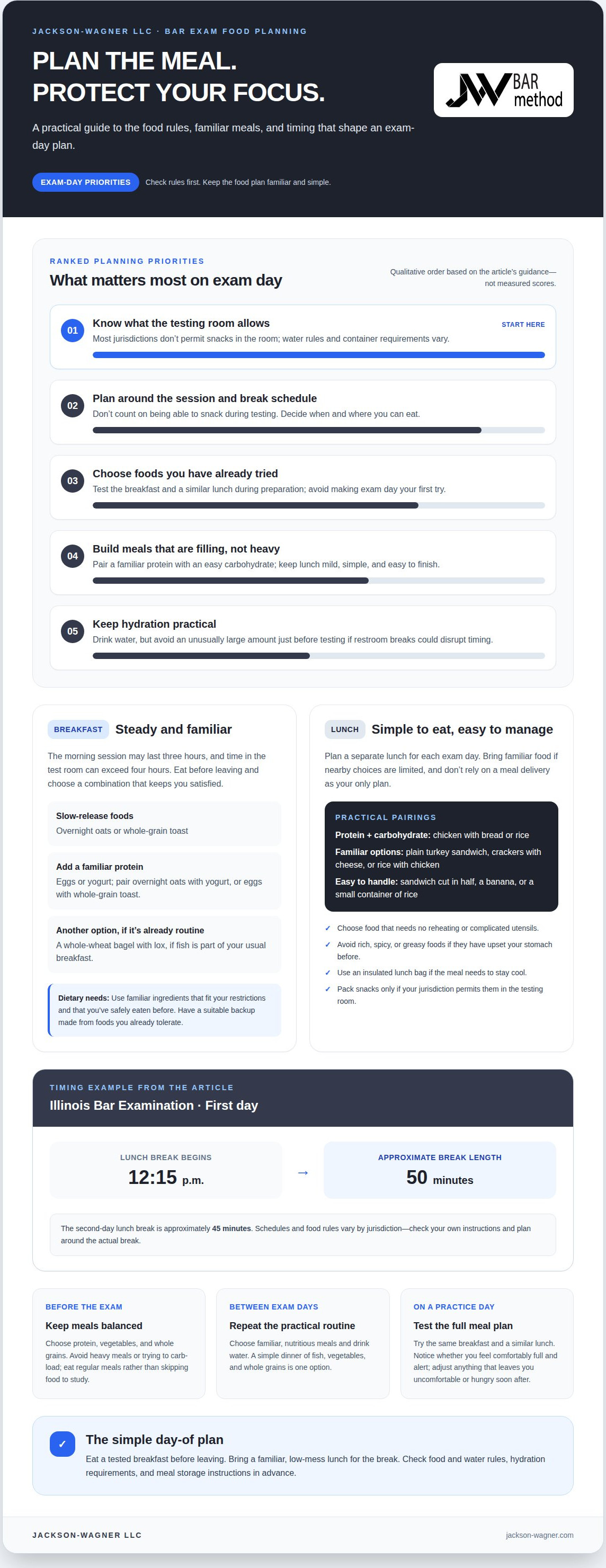
A filling breakfast matters, but so do the rules for food in the exam room. Planning what to eat during the bar exam means choosing foods that help you stay satisfied and knowing where you’re allowed to eat them. Most jurisdictions don’t permit snacks in the testing room, and rules for water vary. Check your jurisdiction’s instructions before exam day so your meal plan fits the rules.
It’s understandable to focus on staying energized through a long testing day. A familiar breakfast and practical lunch make meals easier to manage. Trying new foods or relying on snacks you may not be allowed to bring inside can add avoidable uncertainty.
Plan a filling breakfast, choose a simple lunch, and check food and drink restrictions in advance. Preparing meals around the exam schedule can help you focus on the test instead of making food decisions during the day.
Key Takeaways
- Test your planned breakfast before exam day and choose a combination that keeps you satisfied through the morning session.
- Build meals around familiar, balanced foods before the exam and between testing days to support a steady routine.
- Plan a lunch that’s easy to eat, filling, and unlikely to leave you feeling sluggish.
- Choose bland foods you know sit well, and plan meals around your jurisdiction’s rules for food and drinks.
1. Planning breakfast to stay full through the morning session
Eat breakfast before the bar exam. The morning session may last three hours, and time in the test room can exceed four hours. Choose slow-release foods such as overnight oats or whole-grain toast, and include protein from eggs or yogurt. A whole-wheat bagel with lox is another option if fish is already part of your usual breakfast.
For a filling meal, pair familiar foods that sit well rather than relying on a single item. Try overnight oats with yogurt or eggs with whole-grain toast. Test your planned breakfast during bar preparation and notice whether it keeps you satisfied until lunch. Don’t make exam morning your first time trying an unfamiliar food.
If you have food allergies or dietary restrictions, choose familiar ingredients that fit your needs and that you’ve safely eaten before. Avoid trying new substitutes on exam morning. Prepare a suitable breakfast and have a backup option made with foods you already tolerate.
Plan for hydration, too. Drink water during bar preparation and on exam day, but avoid an unusually large amount just before the session if restroom breaks could disrupt your timing. Rules vary by jurisdiction, so check whether water is allowed in the room and follow the container requirements.
Lunch timing can shape how substantial breakfast needs to be. For the Illinois Bar Examination, the first-day lunch break begins at 12:15 p.m. and lasts approximately 50 minutes; the second-day break is approximately 45 minutes. Use your jurisdiction’s schedule to plan, and don’t assume you can snack during the morning. Most jurisdictions don’t allow snacks in the exam room.
Keep your routine practical: choose breakfast foods you’ve already tried, eat before leaving, and plan hydration around the session and restroom access. This gives you a clear morning plan without depending on food you may not be permitted to bring inside.
2. Why is food important to think about for the bar exam?
Food planning covers more than exam morning. With a two-day testing schedule, meals before the first session and between exam days are also part of preparation. Familiar, balanced meals provide a routine to follow, while last-minute changes make it harder to know how a meal will sit. Plan meals alongside travel and study logistics, not as an afterthought.
The day before the bar exam, choose a balanced meal with protein, vegetables, and whole grains. For example, serve chicken or fish with vegetables and a whole-grain side. Avoid a heavy meal or trying to carb-load; foods that take longer to digest may leave you feeling sleepy the next day. Eat regular meals instead of skipping food to make extra study time.
Between exam days, stick with the same practical approach. Choose nutritious, balanced meals and drink water rather than relying on an unfamiliar restaurant meal or a sudden change in routine. A simple dinner of fish, vegetables, and whole grains is one option. Choose ingredients and portions that feel comfortable, and keep breakfast and lunch straightforward.
Try your planned exam-day meals before the exam, not for the first time at the testing center. On a practice day, have the same breakfast and a similar lunch, then notice whether you feel comfortably full and alert through your study session. If a food leaves you uncomfortable or hungry soon afterward, adjust the combination before exam week.
Make a short meal plan for each testing day. Note what you’ll eat before leaving, during the break, and after testing. For example, plan a familiar dinner after the first day, then follow the same balanced-meal approach before the next session. This makes deciding what to eat during the bar exam part of your preparation, not another exam-day choice.
3. Choosing an energizing, easy-to-eat lunch
For a two-day bar exam, plan a separate lunch for each day. Choose familiar, filling food that’s mild, easy to eat, and unlikely to leave you sluggish. A plain turkey sandwich, crackers with cheese, or rice with chicken can work if those foods suit you. Pack snacks only if your jurisdiction allows them in the testing room.
Keep lunch simple to open and eat during a short break. Choose items that don’t require reheating, complicated utensils, or lengthy preparation. A sandwich cut in half, a banana, or a small container of rice is easier to manage than a messy meal with several components. Use an insulated lunch bag if your meal needs to stay cool.
Make lunch filling without making it heavy. Pair a familiar protein, such as chicken or cheese, with an easy carbohydrate, such as bread or rice. Avoid rich, spicy, or greasy foods if they’ve upset your stomach before. A large or unfamiliar meal can also leave you uncomfortable or sleepy during the next session.
Deciding what to eat during the bar exam also means understanding what you can bring into the testing room. Most jurisdictions restrict food there, and rules for drinks vary. Check whether food must stay in designated storage. If you can’t access your stored lunch during testing, plan to eat it during the break.
Look into food options near the test center before exam day. If nearby choices are limited, bring lunch rather than relying on finding something after the morning session. Hotel food may arrive late or not arrive, so don’t make it your only meal plan. A friend or relative could pick up lunch during the session and have it ready when your break begins.
Test your meal ahead of time. Eat a similar lunch on a study day, then notice whether it’s easy to finish and leaves you comfortably full. Adjust the ingredients or portion before exam day. A clear plan for what to eat during the bar exam makes lunch one less decision during testing.
4. Choosing filling, bland foods
Choose foods that are familiar, mild, and easy to finish during a short break. Plain rice, bread, crackers, bananas, and a simple chicken sandwich are practical examples. Pair a mild carbohydrate with a familiar protein, such as bread with chicken or crackers with cheese, to make lunch more filling without adding a complicated meal.
Portable, low-mess snack options include plain crackers, a banana, or a simple granola bar you already know sits well. Pack them only if your jurisdiction allows snacks in the testing room; otherwise, save them for an approved break area.
Before exam day, test your food during a study session and notice whether it feels comfortable and keeps you satisfied. Skip spicy sauces, greasy fillings, and unfamiliar ingredients if they tend to upset your stomach. A tidy sandwich or sealed container of plain rice is easier to handle than food that drips, crumbles heavily, or needs utensils.
Keep food choices predictable across both exam days. If you pack a sandwich, choose a familiar filling and keep the sides simple. If you prefer crackers and cheese, pack them in separate portions for easier eating. For a plant-based option, try a familiar mild spread with bread, or pair a banana with a snack you’ve already tested.
Use the same practical approach for food restrictions. Choose ingredients that suit your needs and that you’ve safely eaten before, then prepare a backup with familiar alternatives. Keep packaging and ingredients clear for your own planning, and follow your jurisdiction’s rules for food storage and access. A snack in your bag may not be available during the exam.
Build a dependable study routine alongside your exam-day food plan. Explore a structured bar exam preparation approach to organize your preparation around the demands of testing.
Jackson-Wagner: JW Bar Method Prep - Full Exam California Bar
JW Bar Method Prep - Full Exam California Bar offers structured preparation for candidates taking the full California Bar Examination. A practical meal plan supports your exam-day routine, while focused bar preparation helps you develop the knowledge and skills the exam requires. Consider this course if you’re preparing for the full California Bar and want a dedicated prep program.
Candidates taking the Attorney’s Exam can choose JW Bar Method Prep - Attorney’s Exam California Bar. Accelerated preparation options are available for both the full California Bar Exam and the Attorney’s Exam. Choose the program that matches your exam path and preparation timeline.
For details about the California Bar preparation options, contact Jackson-Wagner LLC.
Build a preparation routine you can trust
Your exam-day routine is one part of a broader preparation plan. Once you’ve settled on practical food choices, use the same deliberate approach to organize your study schedule. Consistent preparation can help you arrive ready to apply what you’ve learned, instead of making key decisions at the last minute.
For California Bar preparation, Jackson-Wagner LLC offers JW Bar Method Prep - Full Exam California Bar and JW Bar Method Prep - Attorney’s Exam California Bar. Candidates seeking an accelerated track can choose JW Bar Method Accelerated Prep - Full California Bar Exam. A structured course can help organize your bar preparation as you work toward exam day.
Whether you’re beginning your study plan or refining it, choose an approach that matches the exam you’ll take. For details on preparation options, contact Jackson-Wagner LLC today. Take the next step with a plan that supports steady, purposeful preparation.
Frequently Asked Questions
May I eat or have medications during the exam?
Access to food and medication depends on your jurisdiction’s exam instructions and any approved health-related arrangement. Don’t assume medication is treated like a snack or can be kept at your seat. Review the rules for your specific exam and follow the stated process for medically necessary items before arriving. This helps you plan without relying on an exception at the testing room door.
What can I have or not have during the examination?
Expect restrictions on food and drinks in the testing room, and follow your jurisdiction’s exact instructions. Snacks generally aren’t allowed; coffee and colored beverages generally can’t be brought inside, and bottled-water rules vary. For example, Illinois allows only a clear plastic bottle of water in the test room. Check the instructions for containers, personal belongings, and designated storage so you know what can stay with you.
Why is food important to think about for the bar exam?
Planning food in advance reduces meal decisions during an already demanding testing schedule. It also helps you account for where you’ll eat, how much time you have, and whether food will be accessible during the break. If lunch must remain in designated storage, for example, plan to eat it during the permitted break rather than expecting to reach it during a session.
What foods should you eat during the bar exam for steady energy and focus?
Choose familiar foods that combine a filling carbohydrate with protein, such as whole-grain crackers with cheese or a mild chicken sandwich. Keep the portion comfortable and avoid trying a new meal on exam day. The best option is one you’ve already eaten during a study session and can access within the exam rules and break schedule.
What snacks are allowed during the bar exam in each U.S. jurisdiction?
There isn’t one snack list that applies across every U.S. jurisdiction. Most jurisdictions don’t allow snacks in the exam room, and permitted drinks and storage rules also vary. Massachusetts has a health-related arrangement process that may allow food during testing for a medical condition. Review the instructions for your own exam, especially if you need food access for health reasons.
Can you bring food and drinks into the bar exam testing room?
In most jurisdictions, food can’t be brought into or eaten in the testing room, and drink rules differ. Pennsylvania, for example, encourages applicants to bring lunch but requires it to remain in designated bag storage, where it’s inaccessible during testing. Treat packed food as break-time food, and check whether your jurisdiction permits water or another specific drink at your seat.


