

Passing the bar is an achievement, not an invitation to put you on trial. When someone asks a patronizing question about your result, knowing how to handle condescending questions about passing the bar means choosing whether to answer, set a boundary, or redirect the conversation. You don’t have to defend your worth, and you can choose not to engage.
It’s understandable if a question catches you off guard, especially after the exam has demanded so much focus. A measured response can protect your confidence while keeping the exchange professional. This guide offers practical ways to set boundaries, use light humor without escalating tension, consider what may be behind someone’s tone without excusing it, and steer the conversation toward the issue that matters. You’ll find adaptable phrases for awkward moments and guidance on when to pause or end the exchange.
Key Takeaways
- Respond calmly and state what respectful communication looks like for you; step away if the exchange turns personal or unproductive.
- Use light, non-aggressive humor only when it fits the moment, and switch to a direct response if it risks escalating the conversation.
- Consider possible reasons for someone’s condescending tone without assuming you know their motives or excusing their behavior.
- Redirect assumptions with thoughtful questions and relevant facts to bring the discussion back to the real issue.
1. Setting boundaries around respectful communication
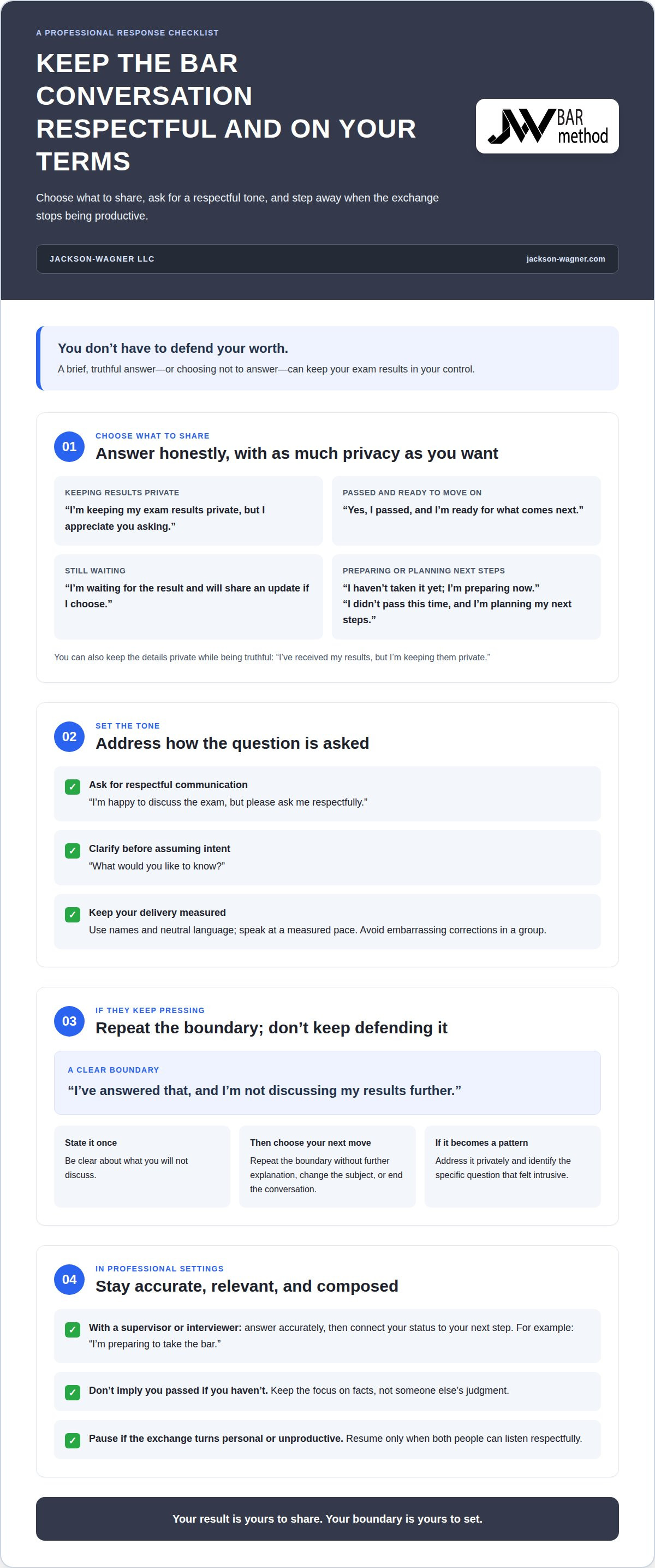
A useful approach to how to handle condescending questions about passing the bar starts with a calm answer and a clear choice about what to share. Try, “I’m keeping my exam results private, but I appreciate you asking.” If you’re comfortable sharing, say, “Yes, I passed, and I’m ready for what comes next.” Both responses keep the exchange brief and professional.
When learning how to handle condescending questions about passing the bar, focus on the tone rather than defending your ability. You might say, “I’m happy to discuss the exam, but please ask me respectfully.” If the person’s meaning isn’t clear, ask, “What would you like to know?” That invites clarification without accepting a judgmental premise.
If someone repeatedly asks whether you failed, state your boundary once, then repeat it without further explanation: “I’ve answered that, and I’m not discussing my results further.” Change the subject or end the conversation. If the same person keeps pressing, address the pattern privately and identify the specific question that felt intrusive.
You can answer honestly without sharing your result: “I’ve received my results, but I’m keeping them private.” If you’re still waiting, say, “I’m waiting for the result and will share an update if I choose.” Either response is truthful and keeps your personal information under your control.
If you haven’t taken or passed the bar, state your status without apologizing: “I haven’t taken it yet; I’m preparing now,” or, “I didn’t pass this time, and I’m planning my next steps.” A direct answer keeps the focus on facts, not someone else’s judgment.
With a supervisor or interviewer, stay professional and relevant. Say, “I’m preparing to take the bar,” or answer accurately, then connect your status to your next step. Don’t imply you passed if you haven’t. A respectful alternative is asking, “Would you be comfortable sharing where you are in the process?” rather than assuming someone failed.
Use names and neutral language, and speak at a measured pace. Avoid embarrassing corrections in a group. If criticism, contempt, defensiveness, or stonewalling takes over, pause the exchange and resume only when both people can listen respectfully.
2. Using humor to diffuse tension
A light joke can ease an awkward exchange without turning it into a confrontation. Keep the humor aimed at the situation, not the person asking. If someone says, “So, did you finally pass?” you might reply, “The exam certainly kept me busy.” Then decide whether to share your result or move on. A gentle line can ease tension, but it shouldn’t replace an answer you want to give directly.
Use humor only when the setting and relationship make it likely to land well. A familiar friend may understand a dry remark; a supervisor, interviewer, or new acquaintance may read the same words as irritation. Keep your voice warm and your wording brief. For example, “That question deserves a dramatic soundtrack” may soften a casual moment, while sarcasm about the asker can make the exchange more hostile.
Before making a joke, take a breath and listen to the whole question. Ask yourself whether the person seems curious, awkward, or deliberately belittling. If they’re sharing a serious concern or pressing you about a painful result, humor may make them feel dismissed and leave you feeling unheard. A direct line such as, “I’d rather not discuss the result right now,” is clearer and kinder in that moment.
How can you stay calm and confident when faced with condescending remarks about bar passage? Pause, relax your shoulders, and consider whether humor serves your goal. You could say, “That’s one way to start a conversation,” then redirect to another topic. If the remark continues, drop the joke and state your boundary plainly. Humor is an option, not an obligation, and you don’t need to perform cheerfulness to make someone else comfortable. Ask yourself: would you still feel respected if someone repeated your line to the room? If not, choose a simpler response.
Before using humor to answer condescension, make sure the joke isn’t offensive or aggressive. A line that crosses either boundary could escalate the situation, so choose wording that stays light and doesn’t attack anyone.
3. Possible psychological roots of condescension
A question about bar results can mean more than simple curiosity. Someone may phrase it in a way that makes you feel inadequate about what you know or have achieved. For example, “Did you actually pass?” implies doubt before you answer. Recognizing that implication can help you separate the speaker’s tone from your professional worth, though it can’t tell you exactly why they chose those words.
Insecurity is one possible reason someone talks down to others. A person who feels uncertain may try to appear more capable by making someone else feel less capable. Another possible explanation is narcissism, meaning an exceptional regard for and interest in oneself. In a conversation about the bar, that might sound like someone turning your exam result into an opportunity to emphasize their own achievements. These are possible patterns, not a diagnosis you can make from one remark.
Some aggressive or competitive people may treat everyday exchanges as contests. They might use a question about passing to assert control rather than learn about your experience. Family dynamics could also play a role: a lack of discipline at home may contribute to an inflated sense of self later, while over-involved parenting with high expectations may teach a child to seek approval from others. These are possible influences, not proof of anyone’s personal history.
Use these explanations to choose your response, not to excuse disrespect. Ask yourself whether the comment was a one-time clumsy question or part of a repeated pattern. If a colleague asks once, a brief answer or redirect may be enough. If they repeatedly imply you’re incapable, set a clear boundary and focus on observable behavior: “Please ask about my work directly, without making assumptions about my exam.” You don’t need to uncover someone’s motive before deciding what communication you’ll accept. A calm response can protect your focus without turning the exchange into an argument about their character.
4. Redirecting the conversation to underlying issues
A condescending question may reflect a practical concern, such as your role, workload, or readiness for a project. Ask an open-ended question before assuming the motive: “Is there a particular concern about my qualifications?” This shifts the exchange from a judgment about passing to a specific issue you can address. Listen to the full answer, then correct any inaccurate assumptions with relevant facts.
When a comment concerns your work, connect your response to the task. For example, if someone asks whether you passed as though you can’t contribute, say, “Are you asking about my experience with this assignment?” Then describe relevant skills or completed work without turning the conversation into a defense of your entire career. A clear example of your expertise can make the discussion more useful.
Address the comment directly if it affects a working relationship, keeps recurring, or makes it difficult to discuss the task. Focus on the words and their impact: “When you ask if I passed in that tone, it sounds like you’re questioning my competence. What concern should we address?” If the remark is a one-off and has no bearing on your work, changing the subject is a reasonable choice.
Use questions to clarify the issue, not to cross-examine the speaker. “What would you need to see to feel confident about this plan?” invites a concrete answer. If they identify a valid gap, respond with accurate information or explain what you can contribute. If their concern remains vague, ask for a specific example. Avoid guessing at their motives; the goal is to clarify expectations and keep the conversation grounded.
If exam preparation is the underlying concern, structured study can help you focus on the work ahead. Explore California bar exam preparation options when you’re ready to plan your next step.
Jackson-Wagner
Jackson-Wagner LLC offers structured preparation for the California Bar Exam, giving candidates a practical next step if questions about passing have renewed their focus on exam preparation. Choose preparation for the full exam or the Attorney’s Exam, with standard and accelerated programs available for each.
The options are JW Bar Method Prep - Full Exam California Bar, JW Bar Method Prep - Attorney’s Exam California Bar, JW Bar Method Accelerated Prep - Full California Bar Exam, and JW Bar Method Accelerated Prep - Attorney’s Exam California Bar. Choose based on which exam you’re preparing for and the study schedule that fits your circumstances. A structured plan can help you focus on your next steps instead of someone else’s judgment about your progress.
If you’d like to discuss California bar exam preparation, contact Jackson-Wagner LLC.
Choose the next step that supports your goals
You get to choose how you respond to a bar-related remark. You can protect your privacy, speak up when a comment crosses a line, or redirect the conversation to a practical concern. Learning how to handle condescending questions about passing the bar can help you stay focused on what you control instead of letting someone else define your progress.
If the exchange has brought your own exam plans into focus, turn that attention into a clear preparation decision. Consider which exam you’re taking and what study schedule suits you, then take one manageable step toward a plan. A deliberate approach gives you something more useful to focus on than proving yourself in an uncomfortable conversation.
For support with California Bar Exam preparation, contact Jackson-Wagner. Keep your attention on your goals, and move forward at your own pace.
Frequently Asked Questions
What are witty but professional comebacks to rude questions about bar exam results?
Choose a brief, situation-focused line that stays warm rather than mocking the asker. Try, “That’s a high-stakes question for a casual chat,” or, “My exam results aren’t a group project.” If you want to keep things light, add a small smile, then move to another topic. Avoid jokes about the person’s intelligence or character, which can turn a tense exchange into an argument.
How can you set boundaries when family or colleagues ask intrusive questions about the bar exam?
Tell family what you’re comfortable sharing before a gathering, such as, “I’ll share news when I’m ready, but I’m not discussing results today.” With colleagues, tie the boundary to work: “I’d prefer to keep exam details separate from this meeting.” If relatives ask through someone else, ask that person not to pass along updates. Consistent wording can prevent repeated negotiation.


