

Make recovery part of your plan, not another test to pass. In the United States, bar exam candidates may wait 6-10 weeks for results, so a practical post-bar exam recovery means giving yourself room to rest, reconnect with people, and choose a trip or a simple form of self-care without putting life on hold.
It’s understandable if you’re replaying answers or finding it hard to switch off after such an intense exam. You don’t have to resolve the uncertainty today. This guide offers practical ways to manage the waiting period, restore your routine, reconnect with people you missed, and decide whether a getaway or a low-key reset feels right. Take what helps and let recovery fit your life.
Key Takeaways
- Separate what you can control now from the exam answers you can’t change, and choose a simple activity to interrupt replaying the test.
- Reconnect with friends and former colleagues in low-pressure ways that make space for life beyond the exam.
- Restore a steady routine by prioritizing rest and giving yourself permission to step away from work while you wait.
- Choose a trip or a small self-care ritual based on what feels genuinely restorative, not what you think recovery is supposed to look like.
1. Manage regret and uncertainty about exam results
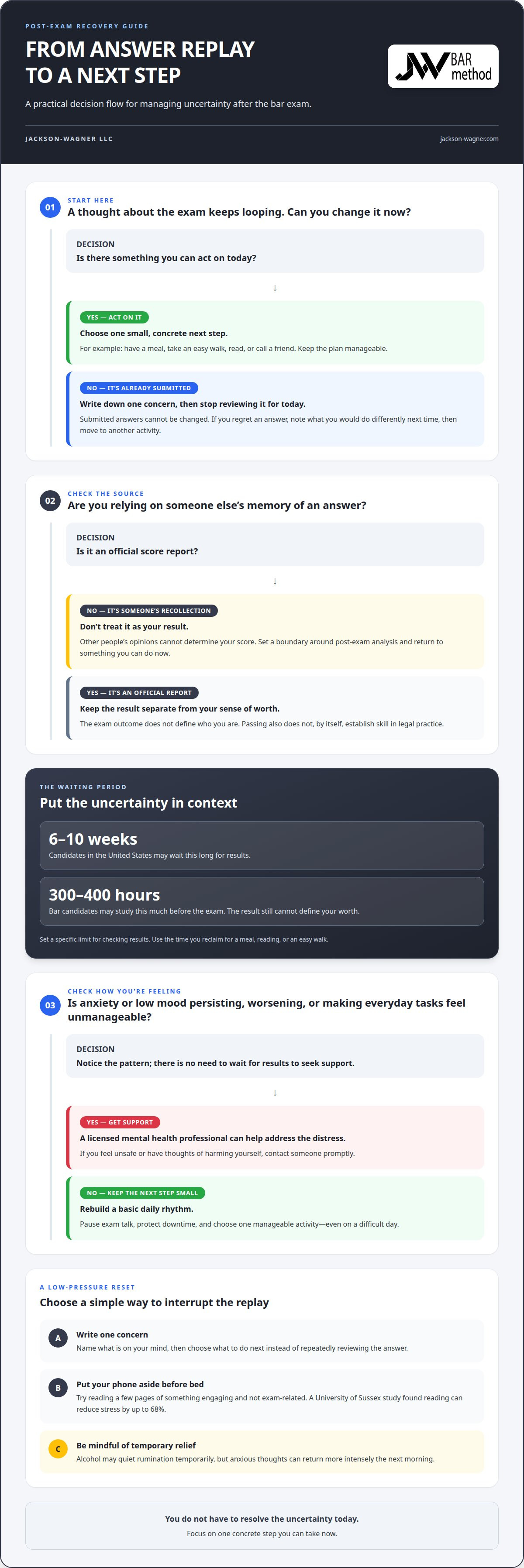
After the exam, replaying a difficult essay can feel like a way to find certainty. But submitted answers cannot be changed, and other people’s opinions cannot determine your result. Candidates in the United States may wait 6-10 weeks for results, so set a boundary around post-exam analysis. Write down one concern, then choose a next activity, such as walking or calling a friend. Avoid treating a classmate’s memory of an answer as an official score report.
Remember the scale of the effort without making it a measure of your worth. Bar candidates may study for 300-400 hours before the exam, but the result still cannot define who you are. Passing also does not, by itself, establish skill in legal practice. If you regret a particular answer, name what you would do differently next time, then stop reviewing it for the day. That turns regret into a bounded lesson rather than an endless replay.
To recover from bar exam burnout and stress, pause exam talk and rebuild a basic daily rhythm. Set a specific limit for checking results, then use that time for a meal, reading, or an easy walk. Alcohol may quiet rumination temporarily, but anxious thoughts can return more intensely the next morning. Instead, put your phone aside and read a few pages before bed. Keep your plan small enough to follow even on a difficult day.
Seek professional help when anxiety or low mood persists, worsens, or makes everyday tasks feel unmanageable. A licensed mental health professional can help you address the distress without requiring you to wait for results. Contact someone promptly if you feel unsafe or have thoughts of harming yourself. Don’t treat the exam outcome as the only measure of your future. For now, focus on one concrete step you can take today, such as scheduling support or telling someone you trust how you’re feeling.
A University of Sussex study found that reading can reduce stress by up to 68%. If waiting draws your attention back to the result, let a quiet reading break give your mind a different focus. Choose something engaging rather than exam-related, and keep the pause gentle and manageable.
2. Reconnect with friends and former colleagues
Start by reaching out to one person you missed during exam preparation. Send a specific invitation, such as, “I’m free Saturday afternoon. Want to get coffee?” A clear plan makes reconnecting easier than promising to catch up someday. Choose someone who can talk about ordinary life, not just exam questions. A walk, shared meal, or phone call gives the conversation a natural focus.
Before you meet, tell friends what kind of support would help. You might say, “I’d like to talk about anything except the exam for an hour.” Or ask a trusted friend to listen while you explain what feels uncertain. If you don’t want to discuss results, say so directly. A simple boundary can keep a reunion from turning into an unplanned score comparison.
Former colleagues can help you reconnect with your professional identity beyond studying. Send a short message to a past supervisor or classmate, then suggest a brief call. Ask what they’ve been working on and share one update from your own life. Keep the first conversation focused on catching up. You can discuss career plans later, when you’re ready to make that the focus.
If you’re job searching, reconnecting can also support practical next steps. Ask a former colleague about their current work or the skills their team values. Then update your résumé and identify firms that fit your interests. Keep the conversation genuine rather than treating each person as a lead. One thoughtful exchange can restore a sense of connection and help you consider what comes next.
Make plans that match your energy instead of accepting every invitation. For example, meet one friend for lunch and leave the evening open. If a group chat turns to exam speculation, mute it temporarily and message one person separately. You could also suggest a movie night or shared meal with no score talk. Small choices like these make social time restorative, not another performance.
3. Rest and sleep after the bar exam
There’s no single timeline for feeling rested after the exam. Recovery can depend on how much sleep you missed, how tense you feel, and whether your daily routine is returning. Start tonight: choose a regular bedtime, dim screens beforehand, and make your bedroom comfortable. If you’re still alert, try a quiet activity, such as reading, rather than forcing sleep.
After an intense exam, you may notice fatigue, muscle tension, irritability, or trouble switching off. These experiences vary from person to person. Rather than judging your recovery by one difficult night, notice what changes after rest, meals, and ordinary movement. If a headache or another physical concern worries you, seek appropriate medical advice.
During the first week, keep your schedule light enough to recover. Eat regular meals, take a walk, and leave unscheduled time between obligations. For example, after a morning appointment, make the afternoon restful instead of filling it with errands. You cannot work 24/7 hours a day while waiting for results; protecting downtime is part of a sustainable routine.
Return to work when you can manage ordinary tasks without sacrificing sleep or basic care. If your work is flexible, restart with a manageable task, such as answering essential messages, then assess how you feel. Resume studying only if another exam or academic deadline makes it necessary. Before opening your notes, decide what the session needs to accomplish and set a stopping point.
Use a simple evening reset to reduce the mental carryover from exam preparation. Put study materials out of sight, prepare clothes for the next day, and write down any unfinished tasks. Then choose a wind-down activity, such as a warm shower or calm music. If the routine doesn’t help, adjust one part at a time instead of rebuilding your whole schedule.
4. Taking a post-bar trip or practicing self-care
A trip can mark the shift from exam mode to ordinary life, but it doesn’t need a packed itinerary. Choose somewhere that feels restorative: a quiet cabin for solitude, a nearby beach for long walks, or a friend’s home for company. Before booking, consider travel time, responsibilities waiting at home, and whether planning feels enjoyable. A simple overnight stay may suit you better than a complicated trip.
Keep your schedule flexible enough to leave room for rest. For example, plan one main activity, such as visiting a museum, and leave the afternoon open. If travel adds stress, stay local and explore a neighborhood you rarely visit. A café breakfast, an afternoon outdoors, or a phone-free evening can create a clear break without making recovery another project.
Self-care works best when it meets a specific need. If you feel socially drained, spend a quiet evening cooking and watching a familiar film. If you miss movement, take an easy walk or return to a hobby you paused during study. If your mind keeps returning to exam questions, choose an absorbing activity, such as reading fiction or gardening. Pick something you can enjoy without measuring your performance.
Make the choice around your energy, not other people’s expectations. A friend may want a big celebration, while you may prefer a calm meal; either can be a good reset. Decide what you want the break to provide, then keep plans aligned with that purpose. If another exam attempt is ahead, explore a structured bar exam study plan as you consider your next steps.
Jackson-Wagner
Jackson-Wagner LLC offers structured JW Bar Method courses for candidates preparing for various bar exams nationwide. If your result means you’ll take the exam again, or you’re preparing for a future attempt, choose a study track that matches your exam and preparation timeline.
Options include preparation for the full bar exam as well as attorney's exams, with standard and accelerated programs. The right fit depends on which exam you’re taking and how much preparation time you have. A structured plan can give your next study period direction while rest and personal routines remain part of your broader post-bar exam recovery.
Contact Jackson-Wagner LLC to discuss which bar preparation option aligns with your next step.
Choose your next step at your own pace
Let your next move reflect what you need now, not pressure to have everything decided. Post-bar exam recovery can make room for both a genuine pause and a practical plan for what comes next. If another California Bar Exam attempt is part of that plan, Jackson-Wagner offers JW Bar Method Prep - Full Exam California Bar, JW Bar Method Prep - Attorney’s Exam California Bar, and JW Bar Method Accelerated Prep - Full California Bar Exam.
Explore a preparation option when you’re ready to turn your attention toward future study. A structured approach can help give that next phase direction while you continue making space for life outside the exam. Contact Jackson-Wagner today to discuss your California bar preparation needs. You’ve already completed a demanding milestone; take the next step with intention and give yourself room to move forward.
Frequently Asked Questions
What are effective ways to manage post-exam anxiety while waiting for results?
Give uncertainty a practical container: make a short “if this, then that” plan for result day. Decide who you’ll call, where you’ll be when you check, and what you’ll do afterward. Focus on actions, not predictions about your score. This can help keep one result notification from dictating the rest of your day.
What should I do if I think I failed the bar exam?
Don’t treat an exam that felt difficult as an official result. Until results arrive, avoid making major decisions based only on remembered answers. If you don’t pass, use the official result and any feedback provided to identify areas that need attention. Then choose a specific next step, such as reviewing your study approach or planning a conversation with someone you trust.


